
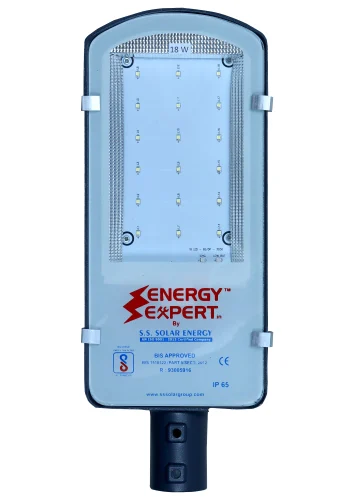
A LED Solar Street Light is an energy-efficient outdoor lighting system that uses sunlight to generate and store electrical energy for nighttime illumination. It combines a solar panel, LED lighting module, rechargeable battery, and controller to provide lighting for roads, streets, parks, parking areas, campuses, industrial locations, and remote areas. Because it can operate without a continuous grid-electricity connection, solar-powered lighting is becoming an increasingly practical option for modern outdoor infrastructure.
What Is a Solar LED Street Light?
A Solar LED Street Light is a standalone lighting system designed to convert solar energy into usable electricity. During daylight hours, the solar panel captures sunlight and charges the battery. After sunset, the stored energy powers the LED luminaire.
The system can automatically turn the light on at night and switch it off or reduce its brightness during the daytime. Depending on the model, additional features such as dimming, motion detection, intelligent battery management, and remote monitoring may also be available.
How Does an LED Solar Street Light Work?
The working principle is simple:
Sunlight → Solar Panel → Charge Controller → Battery → LED Light
During the day, the solar panel converts sunlight into electrical energy. The charge controller manages this energy and helps charge the rechargeable battery safely.
After sunset, the controller detects the reduction in sunlight and activates the LED lighting system. The battery then supplies the stored energy to the LED module throughout the night.
The actual backup duration depends on factors such as battery capacity, solar panel size, LED power consumption, weather conditions, lighting mode, and overall system design.
Main Components of a Solar Street Light
A complete solar lighting system generally consists of several important components.
Solar Panel
The solar panel captures sunlight and converts it into electrical energy. Panel capacity should be selected according to the lighting load, battery capacity, location, and available sunlight.
LED Luminaire
The LED module produces the required illumination. LED technology is preferred because it can provide efficient lighting with comparatively low energy consumption.
Rechargeable Battery
The battery stores energy generated during the day and supplies it to the LED light at night. Battery chemistry and capacity have a direct impact on backup performance.
Solar Charge Controller
The controller regulates charging and discharging and helps protect the battery from unsuitable operating conditions.
Mounting Structure
The mounting arrangement keeps the solar panel and lighting unit securely positioned at the required angle and height.
Pole
The pole determines the installation height and influences lighting coverage, spacing, and illumination distribution.
Types of LED Solar Street Lights
Different solar lighting configurations are available for different applications.
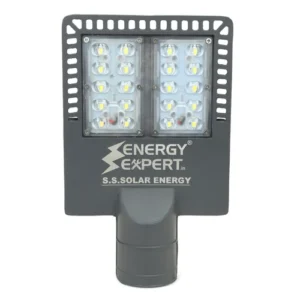
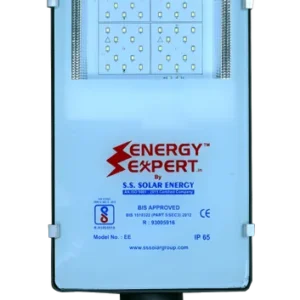
1. All In One Solar Street Light
An All In One Solar Street Light integrates the major components into a compact unit. The solar panel, LED module, battery, and controller are designed as an integrated system.
Advantages:
- Compact design
- Simple installation
- Reduced external wiring
- Clean appearance
- Easy maintenance
- Suitable for many outdoor applications
2. Semi-Integrated Solar Street Light
A semi-integrated design combines some components into the main lighting body while other components may be separately positioned.
This configuration can provide flexibility when selecting the panel, battery, or installation arrangement.
3. Split-Type Solar Street Light
In a split system, the solar panel and lighting unit are installed separately. This design can provide greater flexibility for larger systems and applications where panel positioning requires additional adjustment.
4. Motion Sensor Solar Street Light
Motion-sensor models can reduce lighting output when there is little or no movement and increase brightness when activity is detected.
This approach can help optimize stored battery energy in selected applications.
Key Benefits of Solar-Powered Street Lighting
Reduced Dependence on Grid Electricity
Standalone systems generate and store their own energy, reducing dependence on conventional electrical infrastructure.
Renewable Energy Source
Solar energy is renewable and available naturally during daylight hours, making it a practical energy source for outdoor lighting.
Lower Operating Cost
Because sunlight is used to generate energy, there is normally no regular grid-electricity cost for operating a standalone system.
Flexible Installation
Solar lights can be installed in areas where electrical cabling is difficult, expensive, or unavailable.
Automatic Operation
Modern systems can automatically manage day/night operation without requiring manual switching.
Energy-Efficient Lighting
LED technology can deliver effective illumination while consuming relatively low power.
Suitable for Remote Locations
Solar-powered systems are particularly useful for rural roads, remote areas, parks, farms, and locations with limited grid connectivity.
LED Solar Street Light Specifications
Specifications vary according to the model and project requirement. Important parameters may include:
| Specification | Typical Consideration |
|---|---|
| LED Wattage | Selected according to required illumination |
| Solar Panel | Capacity based on energy requirement |
| Battery | Capacity and battery technology |
| Battery Type | Lithium or other suitable rechargeable technology |
| LED Efficiency | Determines light output per watt |
| IP Rating | Protection against dust and water |
| Operating Mode | Full brightness, dimming, sensor-based, etc. |
| Pole Height | Depends on application and road dimensions |
| Backup | Depends on battery, load and weather |
| Controller | Controls charging and lighting operation |
| Installation | Pole, bracket and mounting arrangement |
Actual specifications should always be checked against the manufacturer’s product datasheet.
Applications of LED Solar Street Lights
A Solar Street Light For Outdoor Lighting can be used in a wide range of locations.
Roads and Streets
Suitable configurations can be used for residential roads, village streets, internal roads, and access roads.
Rural and Remote Areas
Standalone solar lighting can be useful where grid connectivity is limited.
Parks and Gardens
Solar lights can illuminate walking paths, gardens, recreational areas, and public spaces.
Parking Areas
They can provide outdoor illumination for residential, commercial, institutional, and industrial parking areas.
Residential Societies
Solar lighting can be used along internal roads, entrances, pathways, and common areas.
Industrial Premises
Factories, warehouses, manufacturing facilities, and industrial campuses can use solar lights for outdoor areas.
Schools and Institutions
Campus roads, walkways, playgrounds, and parking areas can be illuminated using suitable solar lighting systems.
Highways and Access Roads
Depending on lighting requirements and local conditions, appropriately designed systems can be considered for selected highway and access-road applications.
How to Choose the Right Solar Street Light Wattage?
Choosing a street light only by wattage is not enough. The correct system depends on several factors.
Road Width
A wider road may require greater light distribution and an appropriately designed optical system.
Pole Height
Higher poles require suitable optics and light output to achieve the desired illumination at ground level.
Pole Spacing
The distance between poles affects lighting uniformity and coverage.
Required Illumination
The intended use of the area determines how much illumination is required.
Solar Radiation
Local sunlight conditions influence the required solar panel and battery capacity.
Nighttime Operating Hours
If the system needs to operate for longer hours, adequate energy storage becomes more important.
Weather Conditions
Areas with frequent cloudy or rainy weather may require appropriate system sizing to maintain reliable operation.
Solar Street Light With Lithium Battery
A Solar Street Light With Lithium Battery is designed to store solar energy in a lithium-based rechargeable battery for nighttime operation.
Lithium batteries can offer advantages such as compact size, good energy density, and suitability for repeated charging and discharging cycles.
However, buyers should evaluate the complete battery specification rather than choosing a product solely because it uses lithium technology.
Important factors include:
- Battery capacity
- Battery management system
- Operating temperature
- Charging performance
- Expected cycle life
- Backup requirement
- Manufacturer warranty
Energy Efficient Solar Street Light
An Energy Efficient Solar Street Light combines efficient LED technology with solar energy and intelligent power management.
Energy efficiency can be improved through:
- High-efficiency LED modules
- Suitable solar panel sizing
- Proper battery selection
- Intelligent charging
- Dimming functionality
- Motion sensors
- Optimized lighting schedules
- Suitable optical design
The objective is not simply to use the lowest wattage but to achieve the required illumination with efficient energy utilization.
LED Solar Street Light vs Conventional Street Light
| Feature | Solar Street Light | Conventional Street Light |
|---|---|---|
| Primary Energy Source | Solar Energy | Grid Electricity |
| Grid Connection | Usually Not Required | Generally Required |
| Electricity Consumption | Low/Independent | Regular Grid Consumption |
| Installation | Flexible | Requires Electrical Infrastructure |
| Cabling | Minimal for standalone systems | Generally Required |
| Remote Locations | Suitable | May Require Grid Extension |
| Automation | Common | Depends on system |
| Renewable Energy | Yes | Not inherently |
The right option depends on project requirements, local infrastructure, budget, illumination needs, and long-term operating considerations.
Solar Street Light Price: What Determines the Cost?
Solar Street Light Price varies significantly from one model to another.
The cost can depend on:
- LED wattage
- Solar panel capacity
- Battery type
- Battery capacity
- LED efficiency
- Controller technology
- Body material
- IP protection
- Pole height
- Pole material
- Mounting accessories
- Smart features
- Warranty
- Quantity ordered
- Project-specific customization
For this reason, comparing only the price of two products may not provide a meaningful comparison. Their actual specifications and expected performance should also be evaluated.
LED Solar Street Light Manufacturer in India
Choosing an experienced LED Solar Street Light Manufacturer can be important for product consistency, customization, quality control, technical support, and project execution.
Before selecting a manufacturer, buyers can evaluate:
- Manufacturing experience
- Product range
- Component quality
- Testing practices
- Solar panel specifications
- Battery technology
- LED performance
- Warranty terms
- Customization capability
- Production capacity
- Technical support
For large projects, it is also useful to request product datasheets and technical specifications before finalizing the order.
LED Solar Street Light Supplier
An experienced LED Solar Street Light Supplier should be able to provide the appropriate product configuration according to the project’s requirements.
A reliable supplier can assist with:
- Product selection
- Technical specifications
- Quantity planning
- Installation requirements
- Warranty information
- Delivery
- Replacement support
- Project-specific requirements
For institutional, commercial, and infrastructure projects, technical documentation should be reviewed before procurement.
Solar Street Light for Government Projects
Solar lighting can be considered for various public infrastructure applications, including rural roads, parks, community areas, public spaces, and selected municipal projects.
For government or institutional procurement, buyers may need to consider project specifications, technical compliance, documentation, warranty requirements, testing standards, and tender conditions.
The exact requirements depend on the individual project and procurement authority.
Solar Street Light for Rural Roads
Rural roads may benefit from standalone lighting where grid connectivity is limited or extending electrical infrastructure is difficult.
Before installation, factors such as:
- Road width
- Pole spacing
- Traffic movement
- Solar exposure
- Battery backup
- Lighting requirements
- Local weather
should be evaluated to determine the appropriate system.
How to Install a Solar Street Light?
Proper installation can directly influence system performance.
A basic installation process generally includes:
- Selecting the appropriate installation location.
- Installing a suitable foundation and pole.
- Mounting the solar lighting system.
- Positioning the solar panel for adequate sunlight exposure.
- Securing the required connections.
- Checking the LED lighting operation.
- Configuring automatic lighting or dimming modes.
- Testing the complete system before final commissioning.
The manufacturer’s installation instructions should always be followed for the specific product.
Solar Street Light Maintenance
Although solar lighting generally requires limited maintenance, periodic inspection is recommended.
Solar Panel Cleaning
Dust and dirt can reduce the amount of sunlight reaching the panel. Cleaning frequency depends on the local environment.
Battery Inspection
Battery condition should be monitored according to the manufacturer’s recommendations.
LED Inspection
The luminaire should be checked for physical damage, water ingress, or performance issues.
Pole and Mounting Inspection
Bolts, brackets, mounting structures, and poles should be periodically inspected for stability.
Wiring and Connections
Where applicable, electrical connections should be inspected to identify loose or damaged components.
Common Mistakes When Buying Solar Street Lights
Choosing Only by Wattage
Higher wattage does not automatically mean better lighting. Optical design, efficiency, mounting height, and spacing are equally important.
Focusing Only on Low Price
The cheapest product may not provide the required battery capacity, panel performance, or durability.
Ignoring Battery Specifications
Battery capacity and technology are critical for nighttime operation.
Not Checking Solar Panel Capacity
An undersized panel may not generate sufficient energy for the intended application.
Ignoring Installation Conditions
Trees, buildings, or other structures can shade the solar panel and reduce charging performance.
Not Checking Warranty
Clear warranty terms can provide additional protection for long-term projects.
Buying Without a Datasheet
Technical specifications should be reviewed before placing a bulk or project order.
How to Select a Solar Street Light for Different Applications?
| Application | Important Considerations |
|---|---|
| Residential Street | Lighting coverage, pole height, appearance |
| Village Road | Battery backup, solar exposure, durability |
| Park | Low-glare lighting, spacing, appearance |
| Factory | Illumination, operating hours, durability |
| Parking Area | Coverage, pole layout, brightness |
| Campus | Uniform lighting, safety, installation |
| Remote Area | Battery backup, solar generation, reliability |
| Public Road | Illumination level, spacing, project specifications |
There is no single configuration that is ideal for every application. The system should be selected according to the actual site conditions.
FAQs
1. What is an LED Solar Street Light?
It is an outdoor lighting system that uses solar energy to charge a battery during the day and powers an LED luminaire at night.
2. How many hours can a solar street light work?
Operating time depends on battery capacity, LED power, solar charging, weather, lighting mode, and system design.
3. Does a solar street light work without electricity?
A standalone solar system normally does not require a continuous grid-electricity connection.
4. Which battery is best for solar street lights?
Battery selection depends on the application, required backup, temperature conditions, charging cycles, budget, and system design. Lithium batteries are one commonly used option in modern systems.
5. Is an All In One Solar Street Light good for roads?
It can be suitable for many road and outdoor applications when its wattage, optics, battery, panel capacity, pole height, and spacing are correctly matched to the site.
There are no reviews yet.