
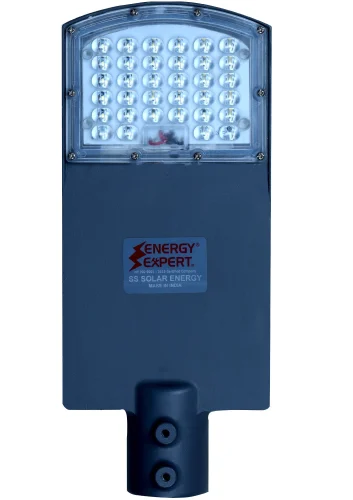
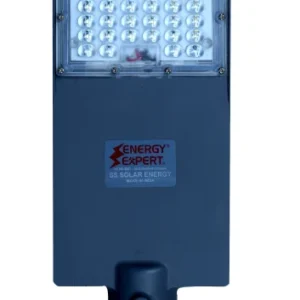
A 100W Solar LED Street Light can be considered for outdoor projects where visibility, uniform light distribution, and efficient site planning are important. From industrial campuses and warehouse surroundings to residential roads and commercial premises, choosing the right lighting arrangement requires more than selecting a 100-watt fixture. Pole positioning, mounting height, road width, solar energy availability, and battery performance all influence the final result.
Planning Outdoor Lighting with 100W Solar LED Street Lights
Outdoor lighting projects often cover different types of spaces, including access roads, vehicle movement areas, building entrances, and open grounds. Each location has different lighting requirements, so the installation layout should be planned according to its intended use.
A 100W solar LED street lighting system may be evaluated for the following project conditions:
- Internal roads that require consistent visibility after sunset.
- Industrial access routes used by vehicles and workers.
- Commercial parking areas with defined vehicle movement paths.
- Residential community roads and shared outdoor spaces.
- Open areas where conventional electrical infrastructure is difficult to extend.
A site assessment helps determine the appropriate number of fixtures, pole positions, and lighting distribution before installation begins.
Why Light Distribution Matters More Than Wattage Alone
Two street lights with the same rated wattage may produce different results because of differences in optical design, LED efficiency, mounting height, and beam angle.
For a 100W solar street light installation, project planners should consider:
Road width: Wider roads may require a different pole arrangement or lighting distribution.
Mounting height: The height of the fixture affects the area covered and the amount of light reaching the ground.
Pole spacing: Excessive spacing can create dark patches between adjacent lights.
Optical performance: Lens and reflector design influence how light is distributed across the target area.
Required illumination: Roads, parking areas, and industrial pathways may have different lighting requirements.
A photometric layout can help estimate illumination levels and identify suitable installation positions before the project begins.
Solar Energy Planning for Nighttime Operation
The performance of a solar-powered street lighting system depends on the relationship between energy consumption, solar generation, and battery storage.
For a 100W LED fixture operating at its full rated power for 10 hours, the nominal energy requirement would be:
100 watts × 10 hours = 1,000 watt-hours, or 1 kWh per night.
This is an illustrative calculation for the LED load alone. Actual consumption may differ because of dimming schedules, controller settings, and the fixture’s real power draw. Solar panel sizing must also account for sunlight availability, charging losses, and battery recovery requirements.
When evaluating a solar LED street light, check whether the proposed panel and battery can support the intended operating schedule during less favourable weather conditions.
Installation Considerations for Different Sites
Industrial Campuses
Industrial sites may require lighting along perimeter roads, loading areas, and internal vehicle routes. Fixture placement should account for vehicle movement, nearby structures, and potential shadows that reduce solar panel exposure.
Residential Roads
For residential developments, the layout should provide suitable visibility along roads, intersections, pathways, and entrances. Pole spacing should be planned to avoid poorly illuminated sections.
Commercial Parking Areas
Parking facilities need attention to vehicle circulation, pedestrian movement, entrances, and parking bays. A lighting layout should consider these zones rather than relying only on the number of fixtures installed.
Remote Locations
Solar street lights may be useful where extending grid connections is challenging. However, the site must offer suitable solar exposure, secure pole foundations, and access for future inspection and maintenance.
Common Mistakes to Avoid When Selecting a 100W Solar Street Light
- Selecting by wattage alone: Confirm lumen output, optical distribution, and lighting requirements.
- Ignoring battery specifications: Verify usable battery capacity and the expected backup duration.
- Using excessive pole spacing: Check the proposed layout to reduce uneven illumination.
- Overlooking solar panel shadows: Nearby buildings, trees, and structures can affect charging.
- Ignoring maintenance access: Ensure technicians can safely inspect and clean system components.
- Skipping technical verification: Review datasheets, applicable standards, warranty conditions, and project-specific requirements.
Avoiding these issues can help buyers make a more informed decision and plan an installation that matches the actual site conditions.
Selecting a Suitable Solar Street Lighting Solution
When comparing a 100W solar LED street light for a commercial or infrastructure project, request a detailed specification sheet covering rated power, luminous output, solar panel capacity, battery chemistry and capacity, controller features, protection rating, and warranty.
For bulk procurement, also confirm whether the quotation includes poles, mounting brackets, foundations, transportation, installation, and commissioning. These details make it easier to compare suppliers on a like-for-like basis.
Energy Expert, a brand of S.S. Solar Energy Pvt. Ltd., provides solar and LED lighting solutions for outdoor applications. Buyers can evaluate suitable configurations according to their site conditions, illumination requirements, and project specifications.
Frequently Asked Questions
Q. How do I calculate the number of 100W solar street lights needed for a road?
The quantity depends on road length and width, pole height, spacing, light distribution, and the required illumination level. A lighting layout should be prepared before finalising the quantity.
Q. Does a 100W solar street light provide the same brightness across all models?
No. Actual brightness depends on LED efficiency, luminous output, optical design, and operating settings. Compare verified lumen specifications instead of relying on wattage alone.
Q. Can solar street lights operate during cloudy weather?
They can operate using stored battery energy, provided sufficient energy has been stored. Extended cloudy periods may reduce backup performance if the system is not sized appropriately.
Q. What information should I request before purchasing?
Request the product datasheet, solar panel and battery specifications, lumen output, protection rating, warranty details, and installation requirements. For large projects, also request a proposed lighting layout.
admin –
good
admin –
good.