
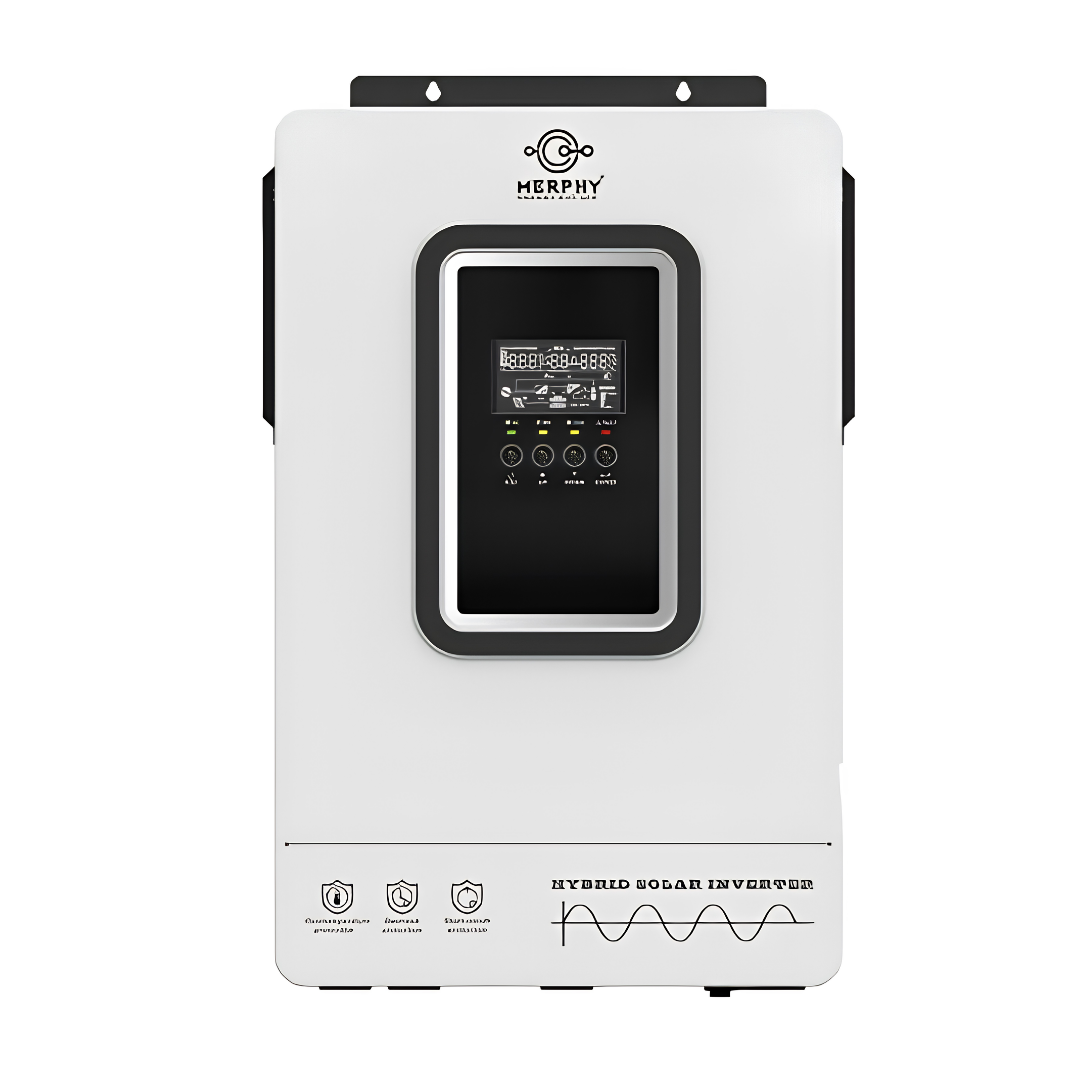
A Solar Hybrid Inverter is an advanced power conversion and energy management device that combines solar power generation, battery storage and grid electricity within a single system. It converts the DC electricity generated by solar panels into AC electricity for operating appliances while also managing battery charging and backup power according to the system configuration.
Unlike a conventional solar inverter that primarily converts solar energy for use by electrical loads or the grid, a hybrid inverter can coordinate energy from multiple sources. Depending on its configuration, solar energy may be used to power connected loads, charge the battery or reduce the amount of electricity drawn from the grid.
A solar hybrid inverter for home can be particularly useful for households that want to use solar energy during the day while keeping battery backup available during power cuts. The same technology can also be used in commercial, institutional and other applications where solar generation and energy storage need to work together.
The overall performance of a hybrid solar inverter depends on factors such as inverter capacity, solar PV input, battery specifications, MPPT technology, load requirements and the operating mode selected for the system. Choosing the right combination of these specifications is therefore important for achieving reliable solar power generation and backup performance.
What Is a Solar Hybrid Inverter?
A Solar Hybrid Inverter is an inverter designed to manage electricity from multiple sources, typically solar panels, batteries and the electrical grid. It converts the DC electricity generated by solar panels into AC electricity that can be used by household, commercial or other electrical loads, while also managing battery charging and energy flow according to its design.
The term “hybrid” refers to the inverter’s ability to coordinate different power sources within one energy system. Instead of relying exclusively on solar generation or grid electricity, a hybrid inverter can intelligently manage available energy based on factors such as solar production, battery charge level, connected load and configured operating priorities.
Solar Panels
Solar panels generate DC electricity when exposed to sunlight. The hybrid inverter receives this solar energy and converts it into usable AC electricity for connected appliances and electrical loads.
Battery Storage
A compatible battery stores electrical energy for later use. Depending on the system configuration, the hybrid inverter can use excess solar generation to charge the battery and later use the stored energy when solar generation is insufficient or backup power is required.
Grid Electricity
The electrical grid can act as an additional power source. Depending on the inverter’s configuration and operating mode, the system may use grid electricity when solar generation and stored battery energy are insufficient.
Energy Management
One of the key functions of a hybrid inverter is managing the flow of energy between the solar panels, battery, grid and connected loads. This can help maximize the use of available solar energy while maintaining battery backup when required.
In simple terms:
Solar Panels + Battery + Grid → Solar Hybrid Inverter → Electrical Loads
The exact operating sequence and available features vary between models. Therefore, specifications such as PV input capacity, battery compatibility, MPPT range, output power, efficiency and backup functionality should be checked before selecting a solar hybrid inverter.
How Does a Solar Hybrid Inverter Work?
A Solar Hybrid Inverter works by managing electricity generated from solar panels, energy stored in a battery and power available from the electrical grid. Its main purpose is to convert solar DC electricity into usable AC power while controlling how energy is supplied to loads and stored for later use.
The exact power flow depends on the inverter model, system configuration and selected operating mode, but the general working process is as follows.
During the Day
When sunlight is available, solar panels generate DC electricity. The hybrid inverter receives this electricity and converts it into AC power for connected appliances and electrical loads.
If the solar system generates more energy than the connected loads require, the available excess energy may be used to charge the battery, depending on the inverter’s configuration.
When Solar Power Is Available
The hybrid inverter continuously manages the available solar energy according to the system’s configured priorities.
For example, solar energy may be used to:
- Power connected loads
- Charge the battery using available surplus energy
- Reduce dependence on grid electricity
The exact priority can vary between different hybrid inverter models.
When Solar Generation Is Insufficient
Solar production can vary because of clouds, low sunlight, shading or other environmental conditions. When solar generation cannot meet the connected load, the hybrid inverter can use another available energy source, such as the battery or grid, depending on its operating mode and configuration.
This energy-management capability allows the system to continue supplying power without relying entirely on real-time solar generation.
During a Power Cut
A compatible hybrid inverter can provide backup power using stored battery energy during a grid outage. The inverter converts the battery’s DC energy into AC electricity for the loads connected to its backup output.
However, not every hybrid inverter supports the same backup functionality. The inverter’s specifications should therefore be checked to confirm its operation during grid outages and identify which loads can be backed up.
When Solar Generation Is Higher Than Load
When solar panels generate more electricity than the connected loads are consuming, the surplus energy can potentially be directed toward battery charging. Some systems may also support other energy-management functions depending on their configuration and local regulations.
Energy Conversion
Solar panels and batteries store or generate electricity in DC form, while most household and commercial appliances use AC electricity. The hybrid inverter performs the required power conversion so that compatible electrical loads can use the available energy.
In simple terms, the general energy flow can be represented as:
Solar Panel → Hybrid Inverter → Load
and, when battery storage is included:
Solar Panel → Hybrid Inverter → Battery → Load
with the Grid available as an additional energy source where supported.
Because the power flow, charging priorities and backup functionality can differ between models, buyers should always refer to the manufacturer’s technical specifications when designing a solar hybrid inverter system.
Main Components of a Solar Hybrid Inverter System
A complete solar hybrid inverter system consists of several components that work together to generate, convert, store and manage electrical energy. The exact configuration depends on the inverter model, battery technology, solar array and application.
| Component | Function |
|---|---|
| Solar Panels | Generate DC electricity from sunlight |
| Solar Hybrid Inverter | Converts electricity and manages energy flow |
| Battery | Stores electrical energy for later use |
| Grid Connection | Provides additional electricity when required |
| Electrical Loads | Consume the generated or stored electricity |
| MPPT Controller | Helps optimize solar energy extraction |
| Monitoring System | Tracks system performance and operating parameters |
Solar Panels
Solar panels are the primary source of renewable energy in the system. They convert sunlight into DC electricity, which is supplied to the hybrid inverter.
The required solar panel capacity depends on factors such as inverter capacity, daily energy consumption, available roof or installation area and local solar conditions.
Solar Hybrid Inverter
The hybrid inverter is the central component of the system. It converts DC electricity from the solar panels or battery into AC electricity for compatible loads and manages energy flow between the available power sources.
Depending on the model, it can also control battery charging, monitor system performance and provide backup power during grid outages.
Battery
The battery stores electrical energy for later use. During periods of sufficient solar generation, surplus energy can be directed toward battery charging according to the inverter’s configuration.
During periods of low solar generation or a power outage, stored battery energy can be used to supply supported loads.
Grid Connection
The electrical grid can provide additional power when solar generation and battery energy are insufficient. A hybrid inverter can coordinate grid electricity with solar and battery power according to its operating mode.
Electrical Loads
Loads are the appliances or equipment that consume electricity generated or managed by the system. In a residential installation, these may include lights, fans, televisions, refrigerators, computers and other compatible appliances.
For commercial and industrial systems, loads can include office equipment, machinery and other electrical equipment depending on the inverter’s capacity and specifications.
MPPT Controller
MPPT (Maximum Power Point Tracking) technology helps the inverter extract available power from the solar panels by operating the PV array at an appropriate voltage and current point.
The number of MPPTs and their voltage/current ranges are important specifications when designing a solar PV system.
Monitoring System
Depending on the model, a hybrid inverter may provide a display, communication interface, mobile application or web-based monitoring platform. These systems can help users monitor parameters such as solar generation, battery status, load consumption and grid power.
Together, these components create an integrated energy-management system in which solar generation, battery storage and grid electricity can work together according to the requirements of the installation.
Key Features of a Solar Hybrid Inverter
A Solar Hybrid Inverter combines power conversion with energy-management functions, allowing solar generation, battery storage and grid electricity to work together within one system. The available features vary by model, so buyers should compare the technical specifications before selecting an inverter.
Solar Energy Integration
A hybrid inverter can receive electricity generated by solar panels and convert it into usable AC power for compatible electrical loads. This allows users to utilize solar energy directly rather than depending entirely on grid electricity.
Battery Backup
A compatible battery can store energy for use when solar generation is unavailable or during a grid outage. The inverter manages the conversion between the battery’s DC energy and the AC power required by connected loads.
Grid Integration
Hybrid inverters can work with the electrical grid where supported. Depending on the operating mode, grid electricity may supplement solar and battery power when additional energy is required.
Intelligent Energy Management
One of the major advantages of a hybrid inverter is its ability to manage multiple energy sources. Depending on the configuration, it can prioritize solar energy, charge the battery with available solar power and use grid or battery energy when required.
MPPT Technology
Many solar hybrid inverters use Maximum Power Point Tracking (MPPT) to optimize the amount of energy extracted from connected solar panels. The number of MPPT inputs and their operating voltage range can vary by model.
Automatic Backup Operation
Compatible hybrid inverter systems can switch to battery-backed operation during a grid outage. This can help maintain power to selected essential loads without requiring manual switching.
The exact backup response time and supported load capacity depend on the inverter specifications.
Multiple Operating Modes
Depending on the model, a hybrid inverter may offer different operating modes for managing solar, battery and grid power. These modes can be configured according to priorities such as maximizing solar consumption, maintaining battery backup or reducing grid dependence.
Battery Charging Management
The inverter can manage battery charging using available solar energy and, where supported, grid electricity. Charging settings can vary according to battery chemistry, battery capacity and manufacturer recommendations.
High Conversion Efficiency
A quality hybrid inverter is designed to convert available DC energy into AC electricity efficiently. Actual efficiency varies by model and operating conditions, so the manufacturer’s rated efficiency should be checked when comparing products.
Monitoring and Communication
Modern hybrid inverters may include communication interfaces or monitoring platforms that allow users to track parameters such as:
- Solar generation
- Battery charge level
- Load consumption
- Grid power
- System status
- Fault or warning information
Battery Compatibility
Different hybrid inverters support different battery technologies and voltage ranges. Some models may support lithium batteries, while others may also be compatible with specific lead-acid battery technologies.
Battery compatibility should always be confirmed before purchasing or connecting a battery.
Protection Features
Depending on the model, hybrid inverters may include protection against conditions such as overvoltage, overcurrent, short circuits, overheating and other electrical faults.
The exact protection functions should be verified from the manufacturer’s technical specifications.
Overall, the right solar power hybrid inverter should be selected based on its capacity, solar input range, battery compatibility, backup requirements, efficiency, monitoring capabilities and the specific needs of the solar energy system.
Benefits of a Solar Hybrid Inverter
A Solar Hybrid Inverter combines solar power generation, battery storage and grid electricity management, making it a flexible option for users who want to utilize renewable energy while maintaining access to backup power.
1. Better Use of Solar Energy
A hybrid inverter allows solar energy to be used directly by connected loads and can, depending on the system configuration, direct surplus solar generation toward battery charging.
This helps increase the practical use of electricity generated by the solar panels.
2. Battery Backup During Power Cuts
One of the key advantages of a hybrid inverter is its ability to work with battery storage. During a grid outage, a compatible system can use stored battery energy to supply supported backup loads.
This can be particularly useful for homes, offices, shops and other locations where uninterrupted power for essential equipment is important.
3. Reduced Dependence on Grid Electricity
By combining solar generation and battery storage, users can reduce their reliance on grid electricity. The actual reduction depends on solar capacity, electricity consumption, battery size, operating mode and local conditions.
4. Better Energy Management
A hybrid inverter can coordinate power from solar panels, batteries and the grid. Depending on the selected operating mode, it can prioritize available solar energy, manage battery charging and use grid power when additional electricity is required.
5. Potential Electricity Bill Savings
Using solar-generated electricity for compatible loads can reduce the amount of electricity purchased from the grid. The potential savings depend on factors such as system size, electricity tariff, solar generation, energy consumption and battery usage.
6. Renewable Energy Integration
Solar hybrid inverters make it possible to integrate solar energy and battery storage into a single energy system. This allows users to utilize renewable energy for everyday electricity requirements while maintaining a backup option.
7. Flexible Operating Modes
Many hybrid inverters provide multiple operating modes that allow users to configure how solar, battery and grid power are utilized. This flexibility can be useful for different energy-consumption patterns.
8. Suitable for Home and Commercial Applications
A solar hybrid inverter for home can support essential residential loads, while higher-capacity systems can be used for shops, offices, institutions and other commercial applications.
The inverter capacity should always be selected according to the connected load and required backup.
9. Efficient Battery Management
The hybrid inverter can manage battery charging and discharging according to its supported battery technology and configured settings. Proper energy management can help ensure that stored energy is available when required.
10. Backup Without a Separate Inverter System
A hybrid inverter can combine solar conversion, battery management and backup functionality within one system. This can simplify system design compared with installing separate devices for different functions, depending on the application.
11. Monitoring and Energy Visibility
Models with monitoring capabilities can provide information about solar generation, battery status, grid usage and load consumption. This allows users to understand how their solar energy system is performing.
12. Useful for Areas With Frequent Power Interruptions
Where power outages are common, a compatible hybrid inverter and battery system can provide backup electricity to selected loads. This makes hybrid systems particularly relevant for homes and businesses that need reliable power for essential equipment.
Overall, the main advantage of a solar hybrid inverter is its ability to combine solar generation, battery storage and grid power management in one integrated system. The actual benefits, however, depend on correct system sizing, suitable battery selection, adequate solar capacity and the operating conditions of the installation.
Solar Hybrid Inverter vs On-Grid Inverter
Both Solar Hybrid Inverters and on-grid solar inverters work with solar panels and can help users utilize solar-generated electricity. However, their energy-storage and backup capabilities are different.
An on-grid inverter is primarily designed to work with the electrical grid, while a hybrid inverter can additionally integrate battery storage and provide backup functionality when supported by the system.
| Feature | Solar Hybrid Inverter | On-Grid Inverter |
|---|---|---|
| Solar Panels | Yes | Yes |
| Grid Connection | Supported | Required for normal operation |
| Battery Storage | Supported by compatible models | Generally not included |
| Battery Backup | Possible with suitable battery and backup configuration | Generally unavailable during a grid outage |
| Power During Grid Failure | Can support selected loads if backup functionality is available | Normally shuts down during grid outage |
| Energy Storage | Yes, when connected to a battery | No |
| Energy Management | Solar + battery + grid | Primarily solar + grid |
| Solar Energy Usage | Direct use and potential battery storage | Direct use/export depending on system |
| System Complexity | Higher | Comparatively simpler |
| Typical Applications | Homes, businesses and backup-focused solar systems | Grid-connected solar installations |
Battery Storage
The biggest difference is battery support. A solar hybrid inverter can be connected to a compatible battery to store excess solar energy for later use.
A conventional on-grid inverter generally operates without battery storage.
Power During a Power Cut
A standard on-grid inverter normally stops supplying power when the grid goes down because of grid-safety requirements.
A hybrid inverter with an appropriate backup output and battery system can continue supplying designated loads during a power outage.
However, backup operation depends on the inverter architecture, battery configuration and installation setup.
Energy Management
A hybrid inverter can manage energy from solar panels, batteries and the grid. This provides more flexibility in deciding how available energy should be used.
An on-grid inverter primarily manages the conversion of solar DC electricity into AC electricity for use within the electrical system and, where permitted, export to the grid.
System Cost
Hybrid systems generally involve additional components such as batteries and may therefore have a higher initial investment than basic on-grid solar systems.
An on-grid system can be more economical when the primary objective is to generate solar electricity and work with an existing reliable grid connection without battery backup.
Which One Should You Choose?
Choose a Solar Hybrid Inverter if you want:
- Solar energy generation
- Battery storage
- Backup during power cuts
- Greater control over energy usage
- Reduced dependence on grid electricity
An on-grid inverter may be more suitable if you primarily want to generate solar electricity, reduce grid consumption and potentially export excess power without requiring battery backup.
Solar Hybrid Inverter vs Off-Grid Inverter
A Solar Hybrid Inverter and an off-grid solar inverter can both work with solar panels and battery storage, but they are designed for different power-system requirements. The main difference is their relationship with the electrical grid.
A hybrid inverter is generally designed to coordinate solar energy, battery storage and grid electricity, while an off-grid inverter is primarily designed to operate independently of the grid.
| Feature | Solar Hybrid Inverter | Off-Grid Inverter |
|---|---|---|
| Solar Panels | Yes | Yes |
| Battery | Supported | Generally required |
| Grid Connection | Supported | Generally not required |
| Grid Backup | Can use grid when required | Not dependent on grid |
| Battery Backup | Available with compatible setup | Core part of the system |
| Energy Sources | Solar + battery + grid | Primarily solar + battery |
| Power During Grid Failure | Possible with backup configuration | Not dependent on grid availability |
| Energy Management | Manages multiple power sources | Primarily manages solar and battery |
| Typical Applications | Homes, businesses and grid-connected backup systems | Remote and off-grid locations |
| System Flexibility | High | Best suited for independent systems |
Grid Connectivity
A hybrid inverter can work with an existing grid connection. It can coordinate solar generation and battery storage with grid electricity according to its operating mode.
An off-grid inverter is designed for systems where the electrical loads operate independently from the utility grid.
Role of the Battery
Battery storage is important for both systems, but it plays a particularly central role in an off-grid installation because there may be no grid available as an alternative power source.
In a hybrid system, the battery can provide backup and store surplus solar energy, while the grid can remain available as another source when supported.
Power During a Grid Outage
A properly configured hybrid inverter can supply designated loads from the battery during a grid outage, provided its specifications support backup operation.
An off-grid inverter does not rely on the grid in the first place, so its operation is based primarily on the available solar generation and stored battery energy.
Suitable Applications
Solar hybrid inverters are commonly considered for:
- Residential solar systems
- Rooftop solar installations
- Shops and offices
- Commercial buildings
- Backup power systems
- Locations with frequent power cuts
Off-grid solar inverters can be useful for:
- Remote homes
- Rural locations
- Farms
- Telecom or remote installations
- Isolated buildings
- Areas without reliable grid access
Which One Should You Choose?
A Solar Hybrid Inverter is generally more suitable when you have grid access but also want solar generation, battery storage and backup capability.
An off-grid inverter may be more appropriate when the system needs to operate independently of the utility grid.
The final choice should be based on grid availability, daily energy consumption, solar potential, battery requirements, backup expectations and the type of loads being powered.
Solar Hybrid Inverter vs Normal Home Inverter
A Solar Hybrid Inverter and a normal home inverter both provide backup power, but their energy sources, operating capabilities and energy-management functions can be significantly different.
A conventional home inverter primarily stores electricity in a battery and provides backup power when the grid supply is unavailable. A solar hybrid inverter can additionally integrate solar panels, battery storage and grid electricity into one energy-management system.
| Feature | Solar Hybrid Inverter | Normal Home Inverter |
|---|---|---|
| Solar Panel Integration | Yes | Generally not built-in |
| Battery Support | Yes | Yes |
| Grid Connection | Yes | Yes |
| Solar Charging | Supported | Generally unavailable |
| Battery Backup | Yes, with compatible battery | Yes |
| Energy Management | Solar + battery + grid | Mainly grid + battery |
| Power During Outage | Possible through backup output | Yes |
| Renewable Energy Usage | Yes | No |
| Electricity Bill Reduction Potential | Higher due to solar integration | Limited |
| System Flexibility | Higher | Comparatively limited |
| Typical Use | Solar + backup systems | Basic home backup |
Solar Energy Integration
The biggest difference is solar integration. A solar hybrid inverter can receive electricity directly from solar panels and manage that energy for household loads and battery charging.
A normal home inverter generally depends on grid electricity to charge its battery unless a separate solar charging system is added.
Battery Charging
A hybrid inverter can manage battery charging from solar energy and, depending on the model, from the grid as well.
A conventional inverter generally charges its battery from the grid.
Power Backup
Both systems can provide backup power when grid electricity fails. However, a hybrid inverter can use stored solar energy to support the backup system.
The actual backup capacity depends on the inverter’s rated power, battery capacity and connected loads.
Electricity Bill Savings
A normal home inverter mainly provides backup and does not itself generate electricity.
A solar hybrid inverter can use solar energy to power compatible loads, potentially reducing the amount of electricity purchased from the grid. Actual savings depend on solar generation, energy consumption, electricity tariffs, battery usage and system configuration.
Energy Management
A hybrid inverter can coordinate multiple energy sources and determine how available solar, battery and grid power are utilized.
A conventional home inverter generally has a simpler operating function focused primarily on charging the battery and providing backup power.
Which One Is Better for a Home?
A normal home inverter can be suitable if your primary requirement is basic backup during power cuts.
A solar hybrid inverter for home can be a better fit if you want to combine:
- Solar power generation
- Battery backup
- Grid electricity
- Energy management
- Reduced grid dependence
- Better utilization of renewable energy
The right choice depends on your load requirements, power-cut frequency, solar potential, battery requirements and budget.
Types of Solar Hybrid Inverters
Solar hybrid inverters are available in different configurations to meet residential, commercial and industrial power requirements. The right type depends on factors such as system capacity, phase requirement, battery technology, solar panel configuration and the type of loads being powered.
Single-Phase Solar Hybrid Inverter
A single-phase solar hybrid inverter is generally suitable for residential properties and smaller applications where the electrical system operates on a single-phase supply.
It can combine solar generation, battery storage and grid power to provide electricity for household loads, subject to the inverter’s rated capacity.
Three-Phase Solar Hybrid Inverter
A three-phase solar hybrid inverter is designed for applications with three-phase electrical systems. It can be suitable for larger homes, commercial buildings, offices, industrial facilities and other projects with higher or three-phase power requirements.
The inverter should be selected according to the site’s load profile and electrical configuration.
Low-Capacity Hybrid Inverter
Lower-capacity hybrid inverters are generally intended for applications with relatively smaller electricity loads. They may be suitable for homes, small offices, shops and other locations where the required load is within the inverter’s rated output.
Before selection, calculate the total connected load and identify which appliances need backup.
High-Capacity Hybrid Inverter
High-capacity systems are designed to handle larger electrical loads and can be considered for commercial, industrial and infrastructure applications.
These systems typically require more detailed planning involving solar PV capacity, battery storage, load profile and electrical infrastructure.
Lithium Battery Compatible Hybrid Inverter
Some hybrid inverters are designed to work with lithium-ion or lithium-based batteries. These systems can offer advanced battery communication and management when the inverter and battery are compatible.
Battery voltage, communication protocol and supported battery models should always be verified before installation.
Hybrid Inverter with Multiple MPPTs
Some solar hybrid inverters feature multiple MPPT (Maximum Power Point Tracking) inputs. Multiple MPPTs can be useful when solar panels are installed in different orientations or when separate PV strings have different operating characteristics.
This allows the inverter to independently optimize different solar inputs within its supported operating ranges.
Hybrid Inverter Based on Application
Hybrid inverters can also be categorized according to their intended application:
Residential Hybrid Inverters
Designed for homes and essential household loads.
Commercial Hybrid Inverters
Used for shops, offices, commercial buildings and other medium-scale applications.
Industrial Hybrid Inverters
Designed for higher-capacity systems with larger or more complex electrical loads.
How to Choose the Right Type?
The correct type of solar power hybrid inverter depends on:
- Required output power
- Single-phase or three-phase supply
- Solar panel capacity
- Battery capacity
- Battery technology
- Number of MPPT inputs
- Required backup loads
- Grid configuration
- Application type
- Future expansion requirements
Rather than selecting an inverter based only on its category or price, compare its complete technical specifications with the requirements of the solar power system.
How to Choose the Right Solar Hybrid Inverter?
Choosing the right Solar Hybrid Inverter requires matching the inverter’s electrical and solar specifications with your actual energy requirements. An inverter that is too small may not support the required loads, while an unnecessarily large system can increase the initial investment.
Check the Required Inverter Capacity
Start by calculating the total power requirement of the appliances or equipment that the inverter needs to operate.
Consider:
- Total connected load
- Essential backup load
- Appliances that may operate simultaneously
- Starting/surge requirements of motors and compressors
- Future load expansion
The inverter’s rated output should be appropriate for the expected load rather than being selected only on the basis of the number of appliances.
Check Maximum PV Input
The maximum PV input indicates how much solar power the inverter can accept from the connected solar array.
The solar panel capacity should remain within the inverter’s specified PV input limits. Both the maximum PV power and electrical parameters such as voltage and current need to be checked.
Check MPPT Voltage Range
The MPPT operating range indicates the voltage range within which the inverter can efficiently track the solar array’s maximum power point.
When designing the solar array, the panel configuration should remain within the inverter’s supported voltage range under expected operating conditions.
Check Number of MPPTs
The number of MPPT inputs can be important when solar panels are installed across different roof orientations or in multiple PV strings.
Multiple MPPTs can allow different solar arrays to be managed independently, depending on the inverter design.
Check Battery Voltage and Capacity
If battery storage is required, confirm:
- Supported battery voltage
- Recommended battery capacity
- Maximum charging current
- Maximum discharging current
- Compatible battery technologies
The battery should be properly matched with the inverter to ensure reliable charging, discharging and backup operation.
Check Battery Compatibility
Not every hybrid inverter works with every battery. If you plan to use a lithium battery, check whether the inverter supports the battery model and its required communication protocol.
For other battery technologies, verify the manufacturer’s recommended voltage, charging profile and operating limits.
Check Output Power
The inverter’s AC output rating should be sufficient for the loads it is expected to supply.
For homes, calculate the essential loads that need to remain operational during a power cut. For commercial or industrial systems, evaluate the complete load profile and operating requirements.
Check Surge Capacity
Some appliances, particularly motors, pumps, refrigerators and compressors, can require significantly more power when starting than during normal operation.
If such equipment is connected to the backup output, check the inverter’s surge or peak-power capability.
Check Efficiency
Inverter efficiency indicates how effectively the system converts available DC energy into usable AC electricity. Compare the manufacturer’s rated efficiency and understand that actual efficiency can vary depending on load and operating conditions.
Check Backup Requirements
If your primary objective is power backup, determine which appliances need to remain operational during an outage and for how long.
This helps determine both the appropriate inverter capacity and the required battery storage.
Check Grid Compatibility
For grid-connected systems, verify that the inverter is compatible with the local electrical supply and applicable installation requirements.
The required input voltage, frequency, phase configuration and grid-interconnection features should match the installation.
Check Monitoring and Communication
Modern hybrid inverters may provide Wi-Fi, Bluetooth, mobile applications, cloud monitoring or other communication options.
These features can help users monitor:
- Solar generation
- Battery status
- Grid consumption
- Load consumption
- Faults and warnings
- System performance
Check Protection Features
Look for appropriate protection features based on the installation requirements, such as overvoltage, overcurrent, short-circuit, overheating and other system protections.
Check Warranty and After-Sales Support
A hybrid inverter is an important part of the solar energy system, so warranty and technical support should be considered before purchase.
Check:
- Warranty duration
- Warranty coverage
- Service availability
- Spare-part support
- Technical assistance
- Installation support
Consider Future Expansion
If you expect your electricity consumption or solar capacity to increase in the future, consider whether the inverter can accommodate the planned expansion.
Compare the Complete System
The best solar hybrid inverter is not necessarily the one with the highest wattage or lowest price. Compare the complete combination of inverter capacity, PV input, MPPT range, battery compatibility, output power, efficiency, backup capability, protection, warranty and support.
Solar Hybrid Inverter Specifications
The specifications of a Solar Hybrid Inverter determine how much solar power it can accept, how much electrical load it can support, which batteries it can work with and how efficiently it can manage energy. Comparing complete technical specifications is important before selecting a hybrid inverter for residential, commercial or industrial applications.
| Specification | Details |
|---|---|
| Rated Power | Depends on model |
| Maximum PV Input Power | Depends on model |
| MPPT Voltage Range | Depends on model |
| Maximum PV Input Current | Depends on model |
| Battery Voltage | Depends on model |
| Battery Type | Depends on model |
| Maximum Charging Current | Depends on model |
| Maximum Discharging Current | Depends on model |
| AC Input Voltage | Depends on model |
| AC Output Voltage | Depends on model |
| Output Frequency | Depends on model |
| Peak/Surge Power | Depends on model |
| Maximum Efficiency | Depends on model |
| Number of MPPTs | Depends on model |
| Communication | Depends on model |
| Protection Features | Depends on model |
| Operating Temperature | Depends on model |
| IP Rating | Depends on model |
| Warranty | As specified by manufacturer |
Rated Power
Rated power indicates the continuous AC output the inverter is designed to provide under specified operating conditions. Select the capacity according to the loads that need to be powered.
Maximum PV Input Power
This indicates the maximum solar PV capacity supported by the inverter according to its specifications. The connected solar array should remain within the manufacturer’s permitted limits.
MPPT Voltage Range
The MPPT voltage range specifies the operating voltage range within which the inverter can track the solar array’s maximum power point.
Correct solar panel string design is essential to keep the operating voltage within the inverter’s supported range.
Maximum PV Input Current
The maximum PV input current specifies how much current the inverter can accept from the solar array. This is particularly important when selecting panel configurations and designing multiple PV strings.
Battery Voltage
Hybrid inverters are designed for specific battery voltage ranges or nominal battery voltages. The battery bank must be compatible with the inverter’s required voltage.
Battery Type
Different models support different battery technologies. Some may support lithium batteries, while others may be designed for specific lead-acid or other battery types.
Always verify the manufacturer’s approved battery compatibility before installation.
Charging and Discharging Current
These specifications indicate how much current the inverter can use to charge or discharge the battery. They can influence battery charging speed and the amount of power available from the battery.
AC Input and Output
AC input specifications determine the electrical supply the inverter can accept from the grid, while AC output specifications define the power delivered to compatible loads.
Voltage, frequency and phase requirements should match the electrical system where the inverter is installed.
Peak or Surge Power
Some electrical equipment requires a temporary increase in power when starting. The inverter’s surge capability indicates how much additional power it can provide for a specified period.
This specification is particularly relevant when the backup system will operate motors, pumps, refrigerators or compressors.
Maximum Efficiency
Maximum efficiency indicates the highest conversion efficiency achievable under specified test conditions. Actual efficiency can vary depending on load level, temperature and operating mode.
Number of MPPTs
An inverter with multiple MPPT inputs can independently manage different PV strings within its supported electrical ranges. This can be useful for installations where solar panels have different orientations or shading conditions.
Communication and Monitoring
Depending on the model, communication options may include Wi-Fi, Bluetooth, RS485, CAN or other interfaces. These can be used for system monitoring, battery communication and configuration.
Protection Features
Protection functions can vary by model but may include safeguards against overvoltage, overcurrent, short circuits, overheating and other electrical conditions.
Operating Temperature and IP Rating
These specifications indicate the environmental conditions in which the inverter is designed to operate and the level of protection provided by its enclosure.
For outdoor or challenging environments, these specifications should be carefully evaluated.
Warranty
Warranty terms can vary between manufacturers and models. Buyers should check the warranty duration, covered components, service conditions and after-sales support before purchasing.
Solar Hybrid Inverter for Home
A Solar Hybrid Inverter for Home is designed to combine solar power generation, battery storage and grid electricity to meet residential energy requirements. It can help homeowners use solar energy for daily loads while keeping battery backup available for periods when solar generation is insufficient or the grid supply is unavailable.
How a Solar Hybrid Inverter Works at Home
During the day, solar panels generate electricity and supply it to the hybrid inverter. The inverter converts the solar DC power into AC electricity for compatible household appliances.
Depending on the system configuration, excess solar energy can be used to charge the battery. When solar generation decreases, the stored battery energy can be used to support the connected loads.
If the battery and solar energy are insufficient, the grid can provide additional power where grid integration is supported.
What Can a Home Solar Hybrid Inverter Power?
The appliances that can be powered depend on the inverter’s rated capacity and the available battery storage.
Typical residential loads may include:
- LED lights
- Fans
- Television
- Wi-Fi router
- Computers
- Refrigerators
- Small appliances
- Essential household equipment
High-power appliances such as air conditioners, water heaters, pumps and induction cooking equipment may require a higher-capacity inverter and appropriately sized battery and solar system.
Benefits for Homeowners
A solar hybrid inverter can provide several advantages for residential users.
Solar Energy Utilization: Use solar-generated electricity for household loads.
Battery Backup: Store energy for use during power cuts or low-solar periods.
Reduced Grid Dependence: Solar generation can reduce reliance on electricity from the grid.
Energy Management: The inverter can coordinate solar, battery and grid power according to its configured operating mode.
Potential Electricity Savings: Using solar energy for household consumption can reduce grid electricity purchases, depending on system size and energy usage.
How to Choose a Solar Hybrid Inverter for Home
Before purchasing, homeowners should evaluate:
- Total household load
- Essential backup load
- Required backup duration
- Solar panel capacity
- Battery capacity
- Battery technology
- Inverter output rating
- PV input range
- MPPT specifications
- Single-phase or three-phase requirement
- Surge power requirement
- Warranty and service support
Battery Sizing for Home Backup
Battery capacity should be based on the loads that need backup and the desired backup duration.
A simple way to estimate energy requirement is:
Required Battery Energy ≈ Backup Load × Backup Time
For example, if essential loads consume an average of 500 W and backup is required for 4 hours:
500 W × 4 hours = 2,000 Wh or 2 kWh
Actual battery sizing should also consider inverter efficiency, battery usable capacity, depth of discharge and other system losses.
Is a Solar Hybrid Inverter Worth It for a Home?
A hybrid inverter can be particularly useful for homes that want solar power + battery backup + grid integration in one system.
It may be a suitable choice where power cuts are frequent or where homeowners want to increase the use of self-generated solar electricity. However, the overall value depends on electricity consumption, solar potential, battery requirements, local electricity tariffs and the initial system cost.
Solar Hybrid Inverter for Commercial & Industrial Applications
A Solar Hybrid Inverter for Commercial and Industrial Applications is designed to manage solar generation, battery storage and grid electricity for businesses and larger facilities. These systems can help organizations use renewable energy while maintaining backup power for selected or critical loads.
Commercial and industrial installations generally have more complex load profiles than residential systems, so inverter capacity, battery sizing, solar PV capacity and electrical configuration need to be evaluated carefully.
Commercial Applications
Solar hybrid inverters can be considered for:
- Offices
- Shops and retail outlets
- Hotels
- Restaurants
- Warehouses
- Educational institutions
- Healthcare facilities
- Commercial buildings
- Service centers
The system can be configured to support essential loads such as lighting, computers, networking equipment, refrigeration and other compatible electrical equipment.
Industrial Applications
Industrial facilities may have larger and more variable electrical loads. Hybrid inverter systems can be used for suitable applications such as:
- Factory lighting
- Administrative offices
- Control systems
- Security systems
- Communication equipment
- Small machinery
- Auxiliary loads
- Critical backup circuits
Heavy industrial equipment and large motors require careful assessment because starting currents and operating loads can be significantly higher than their normal rated consumption.
Solar Energy Utilization
During periods of sufficient sunlight, solar energy can be used to supply compatible commercial or industrial loads.
Depending on the system configuration, surplus solar energy may also be directed toward battery charging. This allows stored energy to be available when solar generation decreases.
Battery Backup for Critical Loads
Battery storage can provide backup power during grid interruptions.
Instead of attempting to operate every load during an outage, businesses can identify critical loads that need continuous or priority power. The hybrid inverter and battery system can then be sized according to those requirements.
Reduced Grid Dependence
Businesses with significant daytime electricity consumption may be able to use solar generation directly for their loads. This can reduce the amount of electricity drawn from the grid, depending on the solar system size and operating conditions.
Energy Management
Commercial hybrid inverter systems can manage multiple sources of energy, including:
Solar → Load
Solar → Battery
Battery → Load
Grid → Load
The actual power priority depends on the inverter’s operating modes and system configuration.
Important Factors for Commercial and Industrial Systems
Before selecting a hybrid inverter, businesses should evaluate:
- Maximum connected load
- Average energy consumption
- Critical backup load
- Peak demand
- Motor starting requirements
- Required backup duration
- Solar PV capacity
- Battery capacity
- Battery chemistry
- Single-phase or three-phase supply
- Available installation space
- Grid characteristics
- Future expansion plans
Choosing Inverter Capacity
Commercial and industrial systems should not be sized simply by adding the wattage of every connected appliance.
The design should consider the actual load profile, simultaneous loads, peak demand and equipment starting requirements. For larger projects, a professional electrical and solar system assessment is recommended.
Benefits for Businesses
A properly designed commercial or industrial hybrid system can offer:
- Better utilization of solar energy
- Battery backup for critical loads
- Reduced dependence on grid electricity
- Flexible energy management
- Renewable energy integration
- Potential reduction in electricity costs
- Greater energy resilience
Is a Hybrid Inverter Suitable for Industrial Use?
It can be suitable for industrial applications where solar generation, battery storage and backup power are required, provided the inverter’s capacity and electrical specifications match the site’s requirements.
For large installations, factors such as three-phase compatibility, battery capacity, PV input, surge requirements, protection systems, monitoring and grid-interconnection requirements should be evaluated before finalizing the system.
A commercial or industrial solar hybrid inverter system should therefore be designed around the facility’s actual energy profile rather than selecting an inverter based only on its rated wattage or price.