
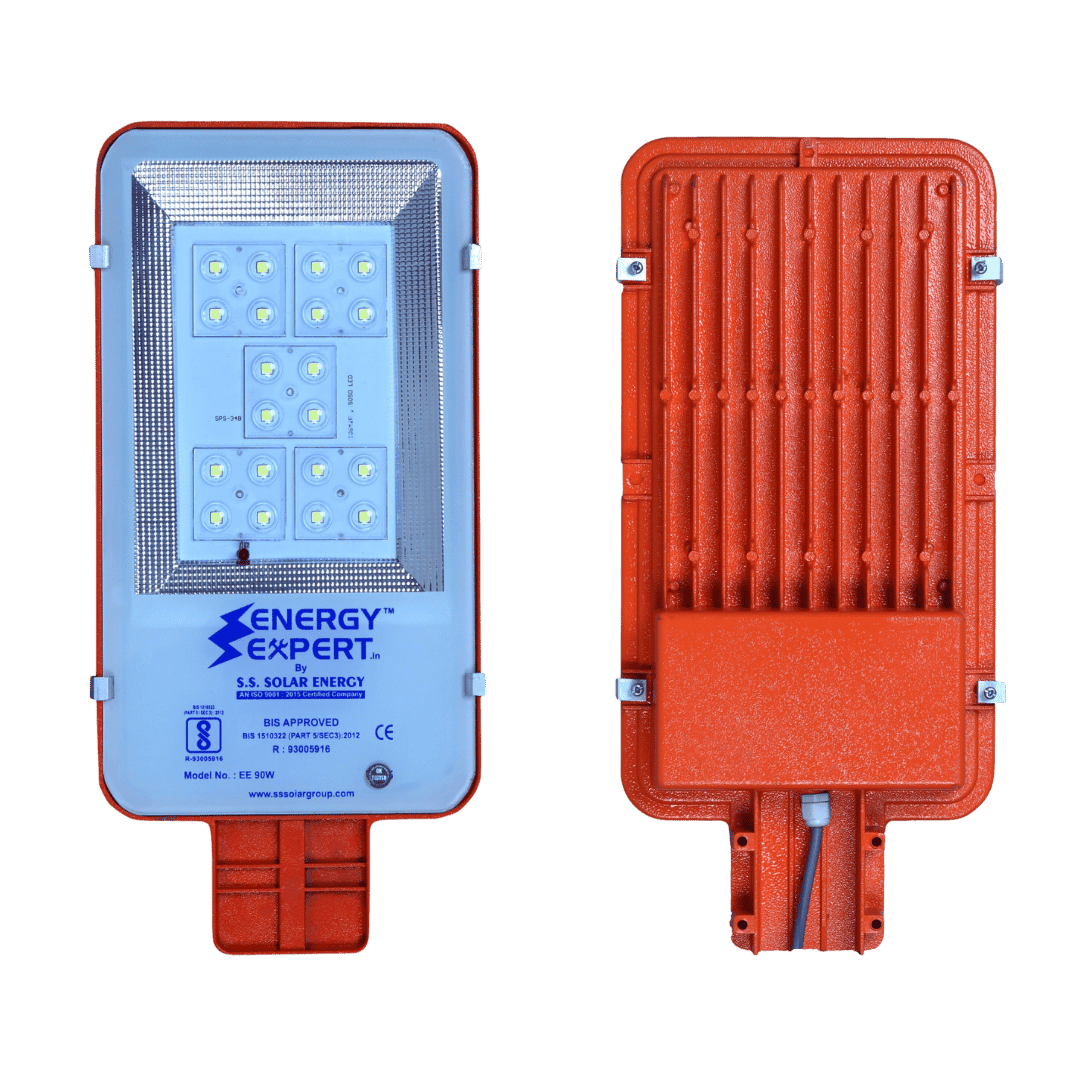
Get reliable and energy-efficient LED Street Light solutions for roads, highways, residential areas, industrial spaces, parking areas, and commercial applications. S S Solar Energy offers LED Street Light options in multiple wattages to meet different illumination and outdoor lighting requirements.
Designed for efficient light distribution, durability, and low maintenance, our LED Street Light range is suitable for projects requiring consistent and dependable outdoor illumination.
Explore LED Street Light Products | Get a Quote
Quick Overview of LED Street Light
An LED Street Light is an outdoor lighting fixture that uses Light Emitting Diodes (LEDs) to provide efficient and focused illumination for roads, streets, highways, parking areas, industrial locations, residential areas, and other outdoor spaces. Compared with conventional lighting technologies, LED-based lighting can offer improved energy efficiency, directional light distribution, long operational life, and reduced maintenance requirements.
The right LED Street Light depends on factors such as the application, road width, mounting height, pole spacing, required illumination, beam angle, and wattage. Choosing the appropriate combination of these factors helps provide better visibility while avoiding unnecessary energy consumption.
S S Solar Energy offers LED Street Light solutions in different wattage options to accommodate a range of outdoor lighting requirements. From smaller residential and internal roads to wider commercial, industrial, and public roads, users can select a suitable LED Street Light based on their specific project requirements.
Key Highlights of LED Street Light
- Energy-efficient LED lighting technology
- Multiple wattage options for different applications
- Suitable for residential, commercial, industrial, and public areas
- Focused and controlled light distribution
- Durable construction for outdoor applications
- Lower maintenance requirements
- Suitable for different pole heights and mounting arrangements
- Available for individual and bulk lighting requirements
What Is an LED Street Light?
An LED Street Light is an outdoor lighting fixture that uses Light Emitting Diodes (LEDs) as its light source to illuminate roads, streets, highways, parking areas, pathways, industrial locations, and other outdoor spaces. It is designed to provide focused and consistent illumination while using electrical power efficiently.
Unlike traditional street lighting systems that may use older lighting technologies, an LED Street Light uses semiconductor-based LED technology to produce light. The fixture typically combines an LED module, driver, optical lens, heat dissipation system, and protective housing to deliver reliable outdoor lighting performance.
The design of an LED Street Light allows light to be directed toward the required area instead of being distributed unnecessarily in multiple directions. This makes the optical design, beam angle, mounting height, and installation layout important factors when selecting a suitable fixture for a particular road or outdoor area.
Where Is an LED Street Light Used?
An LED Street Light can be used across a wide range of outdoor lighting applications, including:
- Residential streets and internal roads
- Main roads and connecting roads
- Highways and wider roadways
- Industrial areas and factory premises
- Commercial complexes
- Parking areas
- Warehouses and logistics facilities
- Institutional campuses
- Public infrastructure
- Outdoor pathways and access roads
The required wattage and lighting configuration can vary depending on the size of the area, road width, pole height, pole spacing, mounting arrangement, and required level of illumination.
Why Choose LED Technology for Street Lighting?
LED technology is widely used for outdoor lighting because it can provide efficient illumination with directional light output and a long operational life. A properly selected LED Street Light can also help reduce maintenance requirements compared with lighting systems that require more frequent lamp replacement.
The overall performance of an LED Street Light depends not only on the LED chip but also on the quality of the driver, optical system, thermal management, housing, and installation. Therefore, these factors should be considered together when selecting a lighting solution for a road or outdoor project.
LED Street Light Available at S S Solar Energy
S S Solar Energy offers a range of LED Street Light solutions in different wattage options to support various road, outdoor, commercial, residential, and industrial lighting requirements. Selecting the right wattage depends on factors such as road width, mounting height, pole spacing, required illumination, and application.
Explore the available LED Street Light options below and select the product that best matches your project requirements.
24W LED Street Light
The 24W LED Street Light is a compact lighting solution for applications where moderate and efficient outdoor illumination is required. It can be considered for residential roads, internal pathways, smaller streets, and other areas where a lower-power lighting solution is appropriate.
Explore: 24W LED Street Light
45W LED Street Light
The 45W LED Street Light provides a higher power option for outdoor areas requiring greater illumination than smaller wattage fixtures. It can be suitable for residential streets, internal roads, commercial areas, and similar applications, depending on the lighting layout.
Explore: 45W LED Street Light
50W LED Street Light
The 50W LED Street Light is designed for applications requiring a balanced combination of power and outdoor illumination. It can be used for residential roads, commercial premises, internal roads, parking areas, and other outdoor spaces based on project-specific lighting requirements.
Explore: 50W LED Street Light
72W LED Street Light
The 72W LED Street Light offers a higher wattage option for applications requiring increased illumination over wider outdoor areas. It can be considered for main roads, larger internal roads, industrial premises, and commercial outdoor spaces, subject to the required lighting design.
Explore: 72W LED Street Light
80W LED Street Light
The 80W LED Street Light is intended for applications where higher illumination is required across wider roads and outdoor areas. It can be suitable for industrial locations, commercial areas, main roads, and other large outdoor spaces when matched with the appropriate mounting height and lighting layout.
Explore: 80W LED Street Light
90W LED Street Light
The 90W LED Street Light provides a higher-power option for outdoor applications requiring increased illumination. It can be considered for wider roads, industrial areas, commercial spaces, and other applications where the lighting design calls for a higher wattage fixture.
Explore: 90W LED Street Light
Choose the Right LED Street Light for Your Application
The highest wattage is not always the best choice. The right LED Street Light should be selected according to the actual lighting requirements of the project. Road width, pole height, pole spacing, beam angle, installation arrangement, and required illumination should all be considered before finalizing a product.
For project-specific requirements or bulk orders, contact S S Solar Energy to discuss the appropriate LED Street Light solution.
How Does an LED Street Light Work?
An LED Street Light works by converting electrical energy into light through Light Emitting Diodes (LEDs). When electrical power reaches the LED module through the driver, the LEDs produce light that is directed toward the road or outdoor area through an optical system. The fixture also uses thermal management and protective housing to support reliable operation in outdoor conditions.
The performance of an LED Street Light depends on the combined operation of several components rather than the LED module alone. Each component has a specific role in producing efficient, controlled, and reliable illumination.
LED Module
The LED module is the primary light-producing component of an LED Street Light. It contains multiple LED chips or LEDs that convert electrical energy into visible light.
The efficiency, light output, colour characteristics, and overall performance of the LED module can influence the performance of the complete fixture. The module is selected according to the required wattage and lighting application.
LED Driver
The LED driver regulates and controls the electrical power supplied to the LED module. It helps provide the appropriate operating conditions required for the LEDs to function consistently.
A reliable driver is important for maintaining stable operation and protecting the LED module from unsuitable electrical conditions. Driver quality can therefore have an impact on the reliability and service life of an LED Street Light.
Heat Dissipation System
LEDs generate heat during operation, and effective thermal management helps control the temperature of the fixture. An LED Street Light commonly uses a heat sink or thermally designed housing to transfer heat away from the LED module.
Proper heat dissipation helps maintain the operating conditions of the LED components and can contribute to consistent performance over extended periods.
Optical Lens
The optical lens controls how light produced by the LED module is distributed over the target area. Different optical designs can provide different beam patterns and light distributions.
The appropriate optical system depends on factors such as road width, pole height, pole spacing, and the required lighting pattern. Proper optical distribution can help direct light toward the intended area and minimize unnecessary light spread.
Protective Housing
The housing protects the internal components of an LED Street Light from external environmental conditions and provides structural support for the fixture.
Depending on the product design, the housing may incorporate materials and protective features intended for outdoor use. The housing also contributes to thermal management and mechanical durability.
AC Power Supply
For an AC-powered LED Street Light, electrical power from the AC supply is delivered to the fixture through the appropriate electrical connection and driver. The driver then regulates the power supplied to the LED module.
The electrical installation should be designed and carried out according to applicable safety requirements by a qualified professional.
How These Components Work Together
The LED module produces the light, while the driver manages the electrical power supplied to it. The heat dissipation system helps manage operating temperature, the optical lens directs the light, and the housing protects the internal components.
Together, these components allow an LED Street Light to provide controlled and dependable illumination for different outdoor lighting applications.
LED Street Light Specifications
The specifications of an LED Street Light determine its lighting performance, electrical compatibility, durability, and suitability for different outdoor applications. While wattage is an important factor, other specifications such as lumen output, input voltage, colour temperature, IP rating, beam angle, housing material, driver, and mounting arrangement should also be considered when selecting a product.
The exact specifications may vary between different models and wattage options. Refer to the individual product page for model-specific technical details.
| Specification | Details |
|---|---|
| Product Type | LED Street Light |
| Available Wattages | 24W, 45W, 50W, 72W, 80W and 90W |
| Light Source | LED |
| Input Voltage | Model-specific |
| Lumen Output | Model-specific |
| Colour Temperature | Model-specific |
| LED Efficiency | Model-specific |
| Beam Angle | Model-specific |
| IP Rating | Model-specific |
| Housing Material | Model-specific |
| LED Driver | Model-specific |
| Mounting Type | Pole/arm mounting, as applicable |
| Operating Environment | Outdoor applications |
| Warranty | As per individual product terms |
Wattage
Wattage indicates the electrical power consumed by the LED Street Light during operation. Different wattage options are available to accommodate different lighting requirements.
However, wattage alone should not be used to determine whether a fixture is suitable for a particular road. Lumen output, optical distribution, mounting height, pole spacing, road width, and required illumination should also be considered.
Lumen Output
Lumen output indicates the amount of visible light produced by the fixture. A higher lumen output does not automatically mean that a fixture is suitable for every application because the way that light is distributed is also important.
For road lighting, the required light output should be evaluated together with the optical design and installation layout.
Colour Temperature
Colour temperature describes the appearance of the light produced by the LED Street Light. Depending on the application and product configuration, different colour temperatures may be available.
The appropriate colour temperature can be selected according to the desired visual appearance, application, and project requirements.
IP Rating
The IP rating indicates the level of protection provided by the fixture enclosure against the entry of solids and water. Since an LED Street Light is normally installed outdoors, an appropriate IP-rated design is important for protection against environmental exposure.
The required IP rating should be checked according to the installation environment and the manufacturer’s product specifications.
Beam Angle and Light Distribution
Beam angle determines how the light is distributed from the fixture. A suitable beam pattern helps direct illumination toward the intended road or outdoor area.
The appropriate optical distribution depends on road width, pole height, pole spacing, mounting arrangement, and the desired illumination pattern.
Driver
The LED driver controls the electrical power supplied to the LED module. Driver specifications can vary according to the model and should be checked on the relevant product page before purchase.
A suitable driver helps maintain stable operation and supports the reliable functioning of the LED Street Light.
Housing and Heat Management
The housing provides structural protection for the fixture and can also contribute to heat dissipation. Effective thermal management is important because excessive operating temperature can affect LED performance and component reliability.
The housing material, heat sink design, and overall thermal construction should therefore be considered when evaluating an LED Street Light for long-term outdoor use.
Mounting Arrangement
An LED Street Light is generally installed on a suitable pole arm or mounting arrangement. Compatibility between the fixture and mounting structure should be confirmed before installation.
The mounting height, tilt angle, pole spacing, and orientation can significantly influence the final light distribution across the road.
Note: Always verify the exact technical specifications, certifications, warranty, and installation requirements on the respective product page before placing an order.
How to Choose the Right LED Street Light Wattage?
Choosing the right LED Street Light wattage depends on more than just the size of the fixture. Factors such as road width, pole height, pole spacing, mounting arrangement, required illumination, beam angle, and the surrounding environment should be considered before selecting a wattage.
A higher wattage does not automatically mean better lighting. The ideal LED Street Light should provide the required illumination while distributing light efficiently across the intended area.
24W LED Street Light
A 24W LED Street Light is a lower-wattage option that can be considered for smaller roads, residential areas, internal pathways, and other outdoor spaces where moderate illumination is required.
It can be suitable where the lighting area is relatively limited and the pole height and spacing allow adequate light coverage.
Suitable for:
- Residential streets
- Internal roads
- Smaller pathways
- Local outdoor areas
- Smaller premises
45W LED Street Light
A 45W LED Street Light provides a higher power option for applications requiring more illumination than smaller wattage fixtures.
It can be considered for residential roads, commercial premises, internal roads, and other outdoor applications where the required lighting level falls within the capability of the fixture.
Suitable for:
- Residential roads
- Internal roads
- Commercial areas
- Parking areas
- Outdoor premises
50W LED Street Light
A 50W LED Street Light can provide a balanced option for applications requiring moderate-to-higher outdoor illumination.
It may be suitable for residential and commercial roads, parking areas, internal roads, and other outdoor spaces. The final selection should be based on the road dimensions, mounting arrangement, and required illumination.
Suitable for:
- Residential roads
- Commercial areas
- Internal roads
- Parking spaces
- Outdoor facilities
72W LED Street Light
A 72W LED Street Light is a higher-wattage option that can be considered for wider roads and larger outdoor areas where increased illumination is required.
It may be suitable for main roads, industrial premises, commercial areas, and larger internal roads, depending on the lighting design.
Suitable for:
- Main roads
- Industrial areas
- Commercial premises
- Wider internal roads
- Large outdoor spaces
80W LED Street Light
An 80W LED Street Light can be considered for applications that require higher illumination across wider outdoor areas.
It may be suitable for industrial locations, commercial premises, main roads, and other large outdoor applications when the fixture’s optical distribution and mounting arrangement are appropriate.
Suitable for:
- Industrial areas
- Main roads
- Commercial spaces
- Large premises
- Wider outdoor areas
90W LED Street Light
A 90W LED Street Light provides a higher-wattage option for applications requiring increased light output.
It can be considered for wider roads, industrial areas, commercial spaces, and other outdoor applications where the lighting design requires a higher-power fixture.
Suitable for:
- Wider roads
- Industrial areas
- Commercial areas
- Large outdoor premises
- High-illumination applications
LED Street Light Wattage Comparison
| Wattage | General Application | Best Considered For |
|---|---|---|
| 24W | Lower-power outdoor lighting | Smaller roads and residential areas |
| 45W | Medium-power lighting | Residential and commercial areas |
| 50W | Medium-power lighting | Roads, parking and outdoor spaces |
| 72W | Higher-power lighting | Main roads and larger areas |
| 80W | Higher-power lighting | Industrial and wider outdoor areas |
| 90W | High-power lighting | Wider roads and large outdoor areas |
Is Higher Wattage Always Better?
No. The highest wattage is not necessarily the best choice for every application. An LED Street Light should be selected according to the actual lighting requirements of the project.
For example, using a significantly higher-wattage fixture than required may increase energy consumption without providing an appropriate improvement in lighting quality. Similarly, choosing a lower wattage for a large road may result in insufficient illumination.
For a more accurate selection, consider the road width, pole height, pole spacing, mounting angle, beam distribution, lumen output, surrounding conditions, and required illumination level together.
For larger projects, a proper lighting layout or photometric assessment can help determine the most suitable LED Street Light configuration.
Key Features of LED Street Light
A well-designed LED Street Light combines efficient LED technology, controlled light distribution, thermal management, electrical control, and durable construction to provide reliable outdoor illumination. The following features are important when evaluating an LED Street Light for roads and other outdoor applications.
Energy-Efficient LED Technology
LED technology converts electrical energy into visible light efficiently and can provide effective illumination with comparatively lower power consumption than many conventional lighting technologies. The actual energy performance depends on the LED efficiency, driver, optical system, and overall fixture design.
Multiple Wattage Options
LED Street Light requirements vary from one project to another. Different wattage options allow users to select a fixture according to the size of the area, required illumination, mounting height, and application.
S S Solar Energy provides multiple wattage options, including 24W, 45W, 50W, 72W, 80W, and 90W, allowing customers to choose a suitable option for different outdoor lighting requirements.
Controlled Light Distribution
The optical system of an LED Street Light helps control the direction and spread of light. Proper light distribution can help illuminate the intended road area more effectively and reduce unnecessary light spillage.
The appropriate optical configuration depends on factors such as road width, pole height, pole spacing, and mounting arrangement.
Effective Heat Dissipation
LED components generate heat during operation, making thermal management an important part of fixture design. A properly designed heat dissipation system helps transfer heat away from the LED module and maintain suitable operating conditions.
Effective thermal management can contribute to consistent performance and component reliability over extended use.
Reliable LED Driver
The LED driver regulates the electrical power supplied to the LED module. A suitable driver supports stable operation and helps the LED Street Light function according to its intended electrical requirements.
Driver specifications can vary by model, so the technical details of the individual product should always be checked before purchase.
Durable Outdoor Housing
The housing protects the internal components of the LED Street Light and provides structural support for the fixture. A suitable outdoor housing should be designed to withstand the environmental conditions expected at the installation location.
The housing design can also contribute to heat dissipation and overall fixture durability.
Outdoor Protection
Outdoor lighting fixtures are exposed to dust, moisture, rain, temperature changes, and other environmental conditions. An appropriate IP-rated design can provide protection against the ingress of solids and water.
The required level of protection depends on the installation environment and should be verified from the product specifications.
Low Maintenance Requirements
A properly selected and installed LED Street Light can reduce maintenance requirements because LED systems generally have long operational lives compared with many traditional lighting technologies.
Regular inspection and cleaning are still recommended to maintain lighting performance and identify potential issues early.
Flexible Applications
LED Street Light can be used across a wide range of applications, including residential roads, commercial areas, industrial premises, parking areas, institutional campuses, internal roads, and public infrastructure.
The appropriate wattage, optics, mounting height, and installation layout should be selected according to the specific application.
Pole and Arm Mounting Compatibility
LED Street Light fixtures are commonly designed for installation on suitable poles or mounting arms. Before installation, the fixture dimensions, mounting arrangement, pole compatibility, and required tilt or orientation should be checked.
Proper mounting helps ensure that the optical system distributes light toward the intended area.
Benefits of LED Street Light
An LED Street Light can provide several practical advantages for roads, commercial spaces, industrial premises, residential areas, and other outdoor lighting applications. Its benefits depend on the quality of the fixture, LED technology, optical design, installation, and operating conditions.
Energy Efficiency
One of the major benefits of LED technology is its ability to produce effective illumination with efficient use of electrical energy. Compared with many conventional lighting technologies, an appropriately designed LED Street Light can help reduce electricity consumption while maintaining the required level of illumination.
For large installations with multiple fixtures, improved energy efficiency can have a meaningful impact on long-term operating costs.
Long Operational Life
LED-based lighting systems are generally designed for long operational use. This can reduce the frequency of complete fixture replacement compared with lighting technologies that require more frequent lamp replacement.
Actual service life depends on factors such as LED quality, driver reliability, operating temperature, electrical conditions, and installation environment.
Lower Maintenance Requirements
Because LED Street Light systems can operate for long periods without frequent lamp replacement, they can help reduce routine maintenance requirements.
For large road and infrastructure projects, fewer replacement requirements can also reduce the time, labour, and access equipment required for maintenance activities.
Better Light Direction
The optical system of an LED Street Light can be designed to direct light toward the required area. Controlled light distribution can improve the utilization of available light and help provide more consistent illumination across the intended road or outdoor space.
The final lighting performance depends on the selected optics, mounting height, pole spacing, and installation design.
Improved Road Visibility
Appropriately designed and installed LED Street Light fixtures can provide consistent illumination across roads and outdoor areas, helping improve visibility for pedestrians, drivers, and other road users.
Actual visibility depends on factors such as light distribution, mounting arrangement, road conditions, weather, and the overall lighting design.
Reduced Long-Term Operating Costs
Energy consumption and maintenance are two important components of the overall cost of operating a street lighting system. By combining efficient LED technology with long operational life and appropriate light distribution, an LED Street Light can help reduce the total cost of ownership over its operating period.
The actual savings depend on the existing lighting system, operating hours, electricity rates, product efficiency, and maintenance requirements.
Suitable for Different Outdoor Applications
LED Street Light solutions are available in different wattages and configurations, making them suitable for a wide range of applications.
They can be used for residential roads, commercial areas, industrial premises, parking spaces, internal roads, institutional campuses, and public infrastructure, provided the selected fixture matches the project’s lighting requirements.
Reliable Outdoor Lighting
A properly designed outdoor LED fixture combines the LED module, driver, optical system, thermal management, and protective housing to support reliable operation in outdoor environments.
Selecting the appropriate IP rating, mounting arrangement, and product configuration for the installation environment is important for dependable long-term performance.
Instant Light Output
LED technology can provide light immediately when the fixture is switched on, without the warm-up period associated with some traditional lighting technologies.
This makes LED Street Light suitable for applications where immediate illumination is required after the lighting system is activated.
Applications of LED Street Light
An LED Street Light can be used for a wide range of outdoor lighting requirements across residential, commercial, industrial, institutional, and public infrastructure projects. The appropriate wattage, optical distribution, mounting height, and installation arrangement should be selected according to the specific application.
Residential Roads and Streets
LED Street Light can be used for residential streets, housing societies, apartment complexes, and internal roads where consistent outdoor illumination is required.
For residential applications, factors such as road width, pole spacing, mounting height, surrounding buildings, and pedestrian movement should be considered when selecting the appropriate fixture.
Main Roads
Main roads require an appropriate lighting layout to provide consistent illumination over the roadway. LED Street Light can be used for roads connecting residential, commercial, and public areas.
The required wattage and optical distribution should be selected according to road dimensions, pole arrangement, traffic conditions, and the desired illumination level.
Highways and Wider Roads
Wider roads and highway applications may require higher-output fixtures and carefully planned optical distribution. LED Street Light can be considered for such applications when the selected fixture provides suitable light output and distribution for the road design.
For large highway projects, photometric planning is recommended to determine appropriate wattage, pole height, spacing, and optical configuration.
Industrial Areas
Factories, manufacturing facilities, industrial parks, and large premises often require outdoor lighting for internal roads, access routes, loading areas, and movement zones.
LED Street Light can provide efficient outdoor illumination for these areas when the fixture is selected according to the site’s dimensions, operating conditions, and environmental exposure.
Commercial Areas
Shopping complexes, business parks, commercial buildings, markets, and other commercial locations can use LED Street Light for roads, entrances, parking areas, and internal access routes.
A suitable lighting layout can help provide clear illumination while maintaining an appropriate visual environment around the premises.
Parking Areas
LED Street Light can be used to illuminate outdoor parking areas, vehicle movement zones, entry and exit routes, and parking access roads.
The fixture selection should consider the size of the parking area, pole height, spacing between fixtures, required illumination, and the presence of buildings or other obstructions.
Warehouses and Logistics Facilities
Large warehouses, distribution centres, logistics parks, and storage facilities may require outdoor lighting around access roads, loading zones, parking areas, and vehicle movement routes.
LED Street Light can be used to provide outdoor illumination in these areas, subject to the site’s lighting design and environmental requirements.
Institutional Campuses
Schools, colleges, universities, hospitals, office campuses, and other institutional premises can use LED Street Light for internal roads, pathways, parking areas, and outdoor circulation zones.
The lighting arrangement can be planned according to pedestrian movement, vehicle movement, building locations, and required illumination levels.
Public Infrastructure
LED Street Light is also suitable for various public infrastructure projects, including municipal roads, community areas, public pathways, access roads, and other outdoor spaces.
For public projects, product selection should consider expected operating hours, environmental conditions, maintenance requirements, installation arrangements, and applicable project specifications.
Residential and Commercial Developments
Real estate developments, gated communities, townships, and mixed-use projects often require lighting across internal roads, entrances, parking areas, and common spaces.
Different wattage options allow project planners to select an LED Street Light according to the requirements of individual areas within the development.
Outdoor Access Roads
Factories, warehouses, institutions, commercial buildings, and residential developments may have access roads connecting the main road to the property. LED Street Light can be installed along these routes to provide suitable illumination for vehicle and pedestrian movement.
The final product selection should be based on road width, pole spacing, mounting height, and the required light distribution.
LED Street Light vs Traditional Street Light
When selecting an outdoor lighting system, it is important to consider energy consumption, light distribution, maintenance, service life, operating conditions, and overall cost. An LED Street Light uses LED technology, while traditional street lighting may use technologies such as high-pressure sodium, metal halide, or other conventional light sources.
The right choice depends on the application and project requirements, but LED technology offers several advantages for modern outdoor lighting installations.
LED Street Light vs Traditional Street Light: Comparison
| Feature | LED Street Light | Traditional Street Light |
|---|---|---|
| Light Source | LED | Conventional lamp technology |
| Energy Efficiency | Generally high | Varies by technology |
| Light Distribution | Can be precisely controlled through optics | Depends on fixture and lamp design |
| Start-Up | Immediate light output | May require warm-up depending on technology |
| Maintenance | Generally lower | May require more frequent lamp replacement |
| Service Life | Generally long | Varies by lamp technology |
| Directional Lighting | Highly controllable | Depends on fixture design |
| Heat Management | Requires dedicated thermal design | Varies by technology |
| Outdoor Protection | Available with suitable IP-rated designs | Depends on fixture |
| Wattage Options | Available in multiple configurations | Depends on lamp and fixture |
| Long-Term Operating Cost | Can be lower | Depends on energy and maintenance costs |
Energy Efficiency
LED technology is generally more energy efficient than many older conventional lighting technologies. An LED Street Light can produce the required illumination using an efficient LED module and optimized optical system.
For large-scale installations, the difference in energy consumption can become significant over the operating life of the lighting system. Actual energy savings depend on the existing lighting technology, operating hours, fixture efficiency, and electricity cost.
Light Distribution
An LED Street Light can use specifically designed optical lenses to control the direction and distribution of light. This allows the lighting system to be designed around the road width, pole height, and pole spacing.
Traditional lighting systems may have different light distribution characteristics depending on the lamp and reflector design.
Maintenance Requirements
LED Street Light systems generally have long operational lives and do not require frequent lamp replacement in the same way as many conventional lighting systems.
This can be particularly beneficial for roads, industrial areas, and large outdoor installations where maintenance access may require additional labour, equipment, or traffic management.
Operational Life
The operational life of an LED Street Light is influenced by the LED module, driver, thermal management, electrical conditions, and operating environment. Proper thermal design and quality components can contribute to reliable long-term operation.
Traditional lighting systems have different service-life characteristics depending on the lamp technology used.
Instant Illumination
LED Street Light can provide light immediately when switched on. Some traditional lighting technologies may require a warm-up period before reaching their intended light output.
Immediate illumination can be useful for outdoor lighting systems controlled by timers, sensors, or centralized control systems.
Overall Cost Consideration
The purchase price is only one part of the cost of a street lighting system. Energy consumption, maintenance, replacement requirements, installation, and operating life should also be considered.
An LED Street Light may provide a lower total cost of ownership over time when its efficiency, service life, and maintenance requirements are favourable for the application.
Which Is Better: LED or Traditional Street Lighting?
For many new outdoor lighting projects, an LED Street Light can be a practical choice because of its energy efficiency, controllable light distribution, long operational life, and reduced maintenance requirements.
However, the final decision should be based on the project’s lighting requirements, existing infrastructure, budget, environmental conditions, and applicable technical standards.
How to Choose the Right LED Street Light?
Choosing the right LED Street Light requires more than simply selecting a higher wattage. The fixture should match the road dimensions, mounting arrangement, required illumination, environmental conditions, and operating requirements of the project.
Consider the following factors before selecting an LED Street Light.
1. Determine the Required Wattage
- Wattage is one of the first specifications buyers consider, but it should not be the only selection factor. The required wattage depends on the size of the area, road width, pole height, pole spacing, required illumination, and optical distribution.
- S S Solar Energy offers multiple options, including 24W, 45W, 50W, 72W, 80W, and 90W LED Street Light, allowing users to choose according to their application.
2. Check Lumen Output
- Lumen output indicates the amount of visible light produced by the fixture. When comparing LED Street Light options, consider the actual lumen output rather than judging performance only by wattage.
- A suitable combination of lumen output and optical distribution helps provide effective illumination across the intended area.
3. Consider Road Width
- Road width plays an important role in selecting the appropriate fixture and optical configuration.
- A narrow residential road may require a different lighting arrangement from a wide main road or highway. The selected LED Street Light should provide suitable coverage across the required road area without creating excessive dark zones or unnecessary light spill.
4. Check Pole Height
- The height at which the LED Street Light is installed affects how light reaches the ground.
- Higher mounting heights generally require appropriate optics and light output to achieve the desired distribution. The fixture should therefore be evaluated according to the actual pole height rather than selecting a product based on wattage alone.
5. Consider Pole Spacing
- The distance between two consecutive lighting poles affects the uniformity of illumination.
- If poles are placed too far apart, dark areas may occur between fixtures. If they are placed too close together, the installation may use more fixtures than necessary.
- The wattage, optics, mounting height, and pole spacing should therefore be considered together during lighting design.
6. Select the Appropriate Beam Angle
- Beam angle determines how widely the light spreads from the fixture. Different road layouts may require different optical distributions.
- A suitable beam pattern helps direct light toward the intended area and can improve the utilization of the available light.
7. Check IP Rating
- Since an LED Street Light is installed outdoors, protection against dust and water is an important consideration.
- Check the product’s IP rating and select a fixture appropriate for the environmental conditions of the installation location. Areas exposed to heavy rain, dust, or other harsh conditions may require suitable higher-protection designs.
8. Evaluate LED Driver Quality
- The driver regulates the electrical power supplied to the LED module and plays an important role in the overall operation of the fixture.
- When purchasing an LED Street Light, check the driver’s specifications, compatibility with the electrical supply, protection features, and manufacturer information where available.
9. Consider Heat Dissipation
- Effective thermal management is essential for LED lighting because excessive operating temperature can affect component performance and reliability.
- Look for an LED Street Light with a properly designed heat sink, housing, or thermal management system appropriate for its operating conditions.
10. Check Housing and Build Quality
- The housing protects the internal components and provides structural support for the fixture. For outdoor applications, the construction should be suitable for the expected environmental conditions.
- Consider the housing material, finishing, mounting arrangement, mechanical strength, and overall build quality before purchasing.
11. Check Colour Temperature
- Colour temperature affects the visual appearance of the emitted light. Different applications may have different preferences depending on the surrounding environment and lighting requirements.
- Check the product’s available colour temperature options and select one appropriate for the intended application.
12. Consider Warranty
- Warranty provides important information about the manufacturer’s or supplier’s support commitment.
- Before purchasing, check the warranty period, coverage, exclusions, replacement process, and terms applicable to the specific LED Street Light model.
13. Consider Installation Requirements
- Before finalizing a fixture, confirm that it is compatible with the existing pole, arm, mounting arrangement, electrical supply, and installation environment.
- Proper installation and alignment are important for achieving the intended light distribution and reliable operation.
14. Compare Total Cost of Ownership
Do not compare LED Street Light options based only on the initial purchase price.
Consider:
- Purchase cost
- Electricity consumption
- Expected operating life
- Maintenance requirements
- Replacement cost
- Installation cost
- Warranty and after-sales support
A product with a slightly higher initial cost may provide better overall value if it offers appropriate efficiency, reliability, service life, and maintenance performance.
15. Consider the Actual Application
- Finally, identify where the LED Street Light will be installed.
- Residential roads, highways, industrial premises, parking areas, commercial spaces, and institutional campuses can have different lighting requirements. The fixture should be selected according to the actual application rather than choosing a product solely because it has a higher wattage.
Quick Checklist Before Buying an LED Street Light
Before placing an order, check:
- Required wattage
- Lumen output
- Road width
- Pole height
- Pole spacing
- Beam angle
- Colour temperature
- IP rating
- Driver specifications
- Heat dissipation
- Housing quality
- Mounting compatibility
- Warranty
- Installation requirements
- Total cost of ownership
For large road, industrial, commercial, or infrastructure projects, a proper lighting assessment or photometric design can help determine the most suitable LED Street Light configuration.
LED Street Light Installation Guide
Proper installation is essential for an LED Street Light to provide the intended light distribution, reliable operation, and long-term performance. The installation should be planned according to the pole height, road width, pole spacing, mounting arrangement, electrical supply, and environmental conditions.
For electrical connections and installation work, a qualified professional should be used and applicable electrical safety requirements should be followed.
Step 1: Assess the Installation Area
Before installing an LED Street Light, assess the road or outdoor area where the fixture will be installed.
Consider:
- Road width
- Pole height
- Pole spacing
- Existing infrastructure
- Required illumination
- Surrounding buildings or obstacles
- Environmental conditions
- Electrical supply availability
This assessment helps determine whether the selected fixture is appropriate for the application.
Step 2: Check Pole and Mounting Compatibility
- Confirm that the LED Street Light is compatible with the existing pole, mounting arm, bracket, or other support structure.
- Check the fixture dimensions, mounting arrangement, mechanical compatibility, and required orientation before installation.
Step 3: Determine the Mounting Position
- The mounting height and position influence how light is distributed across the road.
- The LED Street Light should be positioned and oriented according to the planned lighting layout. Incorrect mounting height or angle can result in uneven illumination or unnecessary light spill.
Step 4: Secure the Fixture
- The fixture should be securely mounted to the appropriate pole or support structure using the recommended mounting arrangement.
- All mechanical connections should be checked to ensure that the fixture remains stable during normal outdoor conditions, including wind and weather exposure.
Step 5: Complete the Electrical Connection
- The electrical connection should be completed according to the product’s technical specifications and applicable electrical safety requirements.
- The electrical supply should be compatible with the LED Street Light and its driver. All wiring, connections, insulation, and protective arrangements should be checked by a qualified electrician before the fixture is energized.
Step 6: Adjust the Fixture Orientation
- After mounting, the LED Street Light should be positioned at the appropriate angle and orientation to direct light toward the intended area.
- The final orientation should be based on the lighting design, road layout, pole arrangement, and optical characteristics of the fixture.
Step 7: Test the LED Street Light
Once installation is complete, test the fixture to confirm that it operates correctly.
Check:
- Light output
- Fixture operation
- Light distribution
- Mounting stability
- Electrical connections
- Unusual noise or flickering
- Any visible signs of overheating or damage
Step 8: Verify the Lighting Coverage
- After the fixture is operating, observe the illumination across the intended area.
- For larger projects, a proper lighting assessment can be used to verify illumination levels and uniformity according to the project’s requirements.
Important Installation Considerations
The performance of an LED Street Light depends not only on the fixture but also on its installation. Incorrect pole spacing, mounting height, orientation, or electrical connection can affect the final lighting performance.
For large roads, highways, industrial premises, commercial developments, and infrastructure projects, professional lighting design and installation are recommended.
Safety Note: Electrical installation, wiring, testing, and commissioning should be carried out by qualified professionals in accordance with applicable electrical standards and local safety requirements.
LED Street Light Maintenance Guide
An LED Street Light generally requires less routine maintenance than many traditional lighting systems, but regular inspection is still important for maintaining consistent illumination, safety, and reliable operation. Proper maintenance can also help identify potential issues before they affect the entire lighting system.
Clean the LED Lens and Fixture
- Dust, dirt, pollution, and other deposits can accumulate on the outer surface of the fixture over time. Regular cleaning helps maintain the optical performance and light output of the LED Street Light.
- The cleaning frequency should depend on the installation environment. Areas with high levels of dust or pollution may require more frequent inspection and cleaning.
Inspect the Fixture Housing
- Regularly inspect the housing for visible damage, corrosion, cracks, loose parts, or other signs of deterioration.
- A damaged housing can affect the protection of internal components, particularly in outdoor environments where the fixture is exposed to rain, dust, and changing weather conditions.
Check Mounting and Mechanical Connections
- The mounting arrangement should be inspected periodically to ensure that the LED Street Light remains securely attached to its pole or support structure.
- Check for loose mounting hardware, unusual movement, fixture misalignment, or other mechanical issues that could affect the position and light distribution of the fixture.
Inspect Electrical Connections
- Electrical connections should be inspected by a qualified professional for signs of loose connections, damaged insulation, overheating, or other electrical issues.
- Any electrical maintenance should be performed only after following appropriate safety procedures and applicable electrical requirements.
Check the LED Driver
- The driver is an important electrical component of an LED Street Light. During maintenance, the driver and related electrical components can be inspected for visible damage, overheating, abnormal operation, or other signs of failure.
- If a driver needs replacement, the replacement component should be compatible with the specific LED Street Light model.
Check Heat Dissipation
- The heat dissipation system should be kept free from excessive dust and obstruction. Accumulated dirt can affect the ability of the fixture to transfer heat away from the LED module.
- Regular inspection of the heat sink and surrounding areas can help maintain suitable thermal conditions.
Inspect for Water or Moisture Ingress
- Outdoor fixtures should be checked for signs of water or moisture entering areas where it should not be present.
- If moisture ingress or housing damage is detected, the fixture should be inspected by a qualified professional before continued operation.
Check Light Output and Distribution
- Periodic observation of the LED Street Light can help identify changes in light output, uneven illumination, flickering, or other abnormal behaviour.
- A noticeable change in lighting performance may indicate an issue with the LED module, driver, optical system, electrical supply, or another component.
Keep the Surrounding Area Clear
- Trees, branches, structures, signs, or other objects can obstruct the light distribution of an LED Street Light.
- The surrounding area should therefore be checked periodically to ensure that the intended lighting path remains unobstructed.
Follow a Preventive Maintenance Schedule
A preventive maintenance schedule can help reduce unexpected failures and maintain consistent outdoor lighting performance.
For large installations, maintenance schedules can include:
- Routine visual inspection
- Fixture cleaning
- Mounting inspection
- Electrical inspection
- Driver inspection
- Thermal management inspection
- Light output assessment
- Housing and IP protection inspection
When Should an LED Street Light Be Replaced?
- Replacement may be required when the fixture has significant physical damage, repeated electrical problems, unacceptable reduction in light output, water ingress, or a component failure that cannot be economically repaired.
- Before replacing the complete fixture, the cause of the problem should be identified so that a suitable repair or replacement decision can be made.
LED Street Light Price
The price of an LED Street Light depends on several factors, including wattage, LED efficiency, lumen output, driver, housing material, optical system, IP rating, warranty, quantity, and overall product specifications. Therefore, two LED Street Light fixtures with similar wattage may have different prices depending on their components and performance.
For the latest product pricing, customers should check the respective product page or contact S S Solar Energy for a current quotation based on their requirements.
Factors That Affect LED Street Light Price
Wattage
Wattage is one of the basic factors that can influence the price of an LED Street Light. Higher-wattage fixtures may require higher-output LED modules, suitable drivers, larger thermal management systems, and different housing configurations.
However, wattage should not be considered the only factor when comparing prices.
LED Efficiency and Light Output
The efficiency of the LED module and the resulting lumen output can affect the overall value and price of a fixture. When comparing products, consider both power consumption and actual light output rather than comparing wattage alone.
LED Driver
The driver is an important part of the fixture and can influence the reliability and overall cost of an LED Street Light. Driver specifications, protection features, efficiency, and compatibility with the electrical supply should be considered when evaluating different products.
Housing and Material
The material, size, construction, finishing, and thermal design of the housing can affect manufacturing cost and product durability.
A suitable outdoor housing should provide appropriate protection while also supporting effective heat dissipation.
Optical System
The optical lens and light distribution system can influence the price depending on the design and application. A properly designed optical system can help distribute light according to the requirements of the road or outdoor area.
IP Rating and Outdoor Protection
The level of protection against dust and water can affect the construction and cost of an outdoor LED Street Light. The required IP rating should be selected according to the environmental conditions of the installation location.
Warranty and After-Sales Support
Warranty terms and after-sales support can also be important when comparing LED Street Light options. A product should be evaluated not only on its initial purchase price but also on the support available during its expected operating period.
Order Quantity
The quantity required can influence the quotation, particularly for commercial, industrial, infrastructure, and bulk projects.
Customers purchasing multiple fixtures should request a project-specific quotation to understand the applicable pricing and commercial terms.
How to Get the Right LED Street Light Price
To receive a suitable quotation, provide information such as:
- Required wattage or preferred product
- Quantity required
- Application
- Project location
- Road or area dimensions
- Pole height and spacing, if available
- Required specifications
- Delivery requirements
- Installation requirements, if applicable
Providing accurate project details allows the supplier to recommend a suitable LED Street Light and prepare a more relevant quotation.
Is the Cheapest LED Street Light the Best Option?
Not necessarily. The initial purchase price is only one part of the total cost of a lighting system.
When comparing LED Street Light products, consider:
- Energy consumption
- Light output
- Driver quality
- Thermal management
- Housing quality
- IP protection
- Expected operating life
- Maintenance requirements
- Warranty
- After-sales support
A product that offers the right combination of performance, reliability, efficiency, and support may provide better long-term value than simply choosing the lowest-priced option.
Request an LED Street Light Quote from S S Solar Energy
Looking for an LED Street Light for a residential, commercial, industrial, or infrastructure project? Explore the available wattage options or contact S S Solar Energy with your project requirements to get the latest product details and quotation.
Why Choose S S Solar Energy for LED Street Light?
Choosing the right supplier is an important part of any outdoor lighting project. Along with product specifications, buyers should consider product range, technical support, warranty, quality standards, order requirements, and after-sales assistance.
S S Solar Energy provides LED Street Light solutions for different outdoor lighting applications, with multiple wattage options available to meet varying project requirements.
Multiple LED Street Light Wattage Options
Different roads and outdoor areas require different lighting configurations. S S Solar Energy offers LED Street Light options in multiple wattages, including 24W, 45W, 50W, 72W, 80W, and 90W, allowing customers to explore options according to their specific application.
Solutions for Different Applications
The LED Street Light range can be considered for residential roads, commercial areas, industrial premises, parking spaces, internal roads, institutional campuses, and other outdoor applications.
Product selection can be based on the required wattage, lighting area, mounting arrangement, and project requirements.
Product-Focused Information
Each LED Street Light model can be evaluated according to its relevant technical specifications, helping buyers compare products based on factors such as wattage, light output, driver, IP protection, optical design, housing, and mounting requirements.
Customers should refer to the individual product page for the latest model-specific specifications.
Support for Bulk and Project Requirements
Outdoor lighting projects may require multiple fixtures rather than individual units. For commercial, industrial, infrastructure, and other bulk requirements, customers can contact S S Solar Energy with their project details to discuss suitable LED Street Light options and quotation requirements.
Application-Based Product Selection
Choosing an LED Street Light based only on wattage may not provide the best result. Factors such as road width, pole height, pole spacing, beam distribution, and required illumination should also be considered.
S S Solar Energy can help customers evaluate the available product options according to their stated application and requirements.
Focus on Long-Term Lighting Requirements
An LED Street Light should be evaluated based on more than its initial purchase price. Energy consumption, product specifications, maintenance requirements, warranty, reliability, and expected operating conditions are also important considerations.
This approach helps buyers select a lighting solution that is appropriate for their long-term outdoor lighting requirements.
Get the Right LED Street Light for Your Project
Whether you need an LED Street Light for a residential road, commercial property, industrial area, parking space, or larger infrastructure project, selecting the right configuration is essential.
Explore the available LED Street Light products from S S Solar Energy or contact the team with your project requirements to find a suitable option.
Explore LED Street Light Products | Get a Quote
LED Street Light Buying Guide
Buying the right LED Street Light requires evaluating the product according to the actual installation requirements rather than selecting a fixture based only on wattage or price. A suitable LED Street Light should provide the required illumination, work reliably in the installation environment, and remain practical to operate and maintain over its expected service life.
Use the following checklist before purchasing an LED Street Light.
1. Understand Your Lighting Requirement
Start by identifying where the LED Street Light will be installed and what type of illumination is required.
Consider whether the application is a residential road, main road, highway, industrial area, commercial property, parking space, institutional campus, or another outdoor location.
2. Measure the Road or Area
The dimensions of the installation area influence the required lighting arrangement.
For road applications, note the:
- Road width
- Road length
- Pole height
- Pole spacing
- Number of lanes
- Existing lighting arrangement
- Surrounding structures
These details can help determine the appropriate fixture and optical configuration.
3. Select the Appropriate Wattage
Choose the wattage according to the actual lighting requirement rather than automatically selecting the highest available option.
S S Solar Energy offers 24W, 45W, 50W, 72W, 80W, and 90W LED Street Light options for different outdoor applications.
The final selection should also consider lumen output, optics, mounting height, pole spacing, and required illumination.
4. Check Lumen Output
Wattage tells you how much electrical power the fixture consumes, while lumen output indicates the amount of visible light produced.
When comparing LED Street Light products, check both parameters to understand the relationship between energy consumption and light output.
5. Check the Optical Design
The optical system determines how light is distributed over the target area.
For road lighting, consider whether the beam pattern and light distribution are appropriate for the road width, mounting height, pole spacing, and required coverage.
6. Check the IP Rating
Since an LED Street Light is exposed to outdoor conditions, check its IP rating before purchasing.
The appropriate level of protection depends on factors such as rainfall, dust, humidity, location, and overall environmental exposure.
7. Evaluate the LED Driver
The driver is responsible for regulating the electrical power supplied to the LED module.
Before purchasing, check the driver’s specifications, electrical compatibility, protection features, manufacturer information, and warranty terms where applicable.
8. Check Thermal Management
Good thermal management helps control the operating temperature of the LED module and other components.
Review the heat sink, housing design, and overall thermal construction of the LED Street Light, especially when the fixture will operate for extended periods or in hot outdoor environments.
9. Consider Housing Quality
The housing should provide suitable mechanical protection for the internal components and be appropriate for outdoor use.
Consider the construction material, finishing, structural design, mounting arrangement, and resistance to expected environmental conditions.
10. Check Warranty Terms
Always understand the warranty before purchasing.
Check:
- Warranty duration
- Components covered
- Replacement or repair terms
- Exclusions
- Claim process
- Conditions of warranty validity
Clear warranty terms can provide greater confidence when purchasing lighting products for larger installations.
11. Consider Installation Compatibility
Confirm that the LED Street Light can be installed on the available pole, bracket, or mounting arm.
Check fixture dimensions, mounting size, cable arrangement, orientation, and other installation requirements before finalizing the product.
12. Compare Total Cost of Ownership
Do not compare products only by their initial price.
Consider:
- Purchase cost
- Energy consumption
- Maintenance
- Replacement requirements
- Installation cost
- Expected operating life
- Warranty
- After-sales support
This provides a more realistic understanding of the long-term value of the lighting system.
13. Consider the Installation Environment
Different locations can expose an LED Street Light to different operating conditions.
For example, an industrial area may have higher dust levels, while a coastal or high-humidity environment may require greater attention to corrosion and moisture protection.
Choose the fixture according to the actual environmental conditions of the project.
14. Check Supplier Support
For large projects, supplier support can be as important as the product itself.
Consider whether the supplier can provide:
- Product information
- Technical specifications
- Bulk quotations
- Warranty support
- Product recommendations
- After-sales assistance
- Project-related support
15. Ask for a Project-Specific Recommendation
If you are unsure which LED Street Light is suitable, provide the supplier with your project details instead of selecting a wattage based only on assumptions.
Useful information includes:
- Road width
- Pole height
- Pole spacing
- Application
- Required number of fixtures
- Project location
- Existing electrical infrastructure
- Preferred wattage, if known
For larger installations, a professional lighting assessment or photometric design can provide a more accurate basis for product selection.
LED Street Light Buying Checklist
Before placing your order, make sure you have checked:
☑ Application
☑ Wattage
☑ Lumen output
☑ Road width
☑ Pole height
☑ Pole spacing
☑ Beam angle
☑ IP rating
☑ LED driver
☑ Heat dissipation
☑ Housing quality
☑ Mounting compatibility
☑ Warranty
☑ Installation requirements
☑ Total cost of ownership
☑ Supplier support
Choosing an LED Street Light based on these factors can help ensure that the selected fixture matches the actual requirements of the project instead of being chosen only on the basis of wattage or price.
Frequently Asked Questions (FAQs)
Q. What is an LED Street Light?
An LED Street Light is an outdoor lighting fixture that uses Light Emitting Diodes (LEDs) to illuminate roads, streets, highways, parking areas, industrial premises, residential areas, and other outdoor spaces. It uses an LED module, driver, optical system, thermal management, and protective housing to provide controlled outdoor illumination.
Q. What wattage LED Street Light is suitable for a road?
The suitable wattage depends on the road width, pole height, pole spacing, required illumination, beam distribution, and surrounding conditions. S S Solar Energy offers 24W, 45W, 50W, 72W, 80W, and 90W LED Street Light options. The appropriate wattage should be selected according to the actual lighting requirements rather than choosing the highest wattage.
Q. Is a higher-wattage LED Street Light always better?
No. Higher wattage does not automatically mean better lighting. A suitable LED Street Light should provide the required illumination with appropriate light distribution. Road width, mounting height, pole spacing, lumen output, beam angle, and application should also be considered.
Q. How much electricity does an LED Street Light consume?
The electrical consumption depends primarily on the fixture’s rated wattage and operating hours. For example, a 50W LED Street Light uses approximately 0.05 kWh of electricity for one hour of operation when operating at its rated power.
Actual energy consumption can vary depending on the driver, operating conditions, controls, and electrical system.
Q. What are the main benefits of an LED Street Light?
Key benefits include energy-efficient LED technology, controlled light distribution, long operational life, reduced maintenance requirements, immediate illumination, and suitability for a wide range of outdoor applications.
Q. Where can an LED Street Light be used?
An LED Street Light can be used for residential roads, main roads, highways, industrial areas, commercial premises, parking areas, warehouses, institutional campuses, public infrastructure, and outdoor access roads.
Q. Does an LED Street Light work in rain?
An LED Street Light designed for outdoor use can operate in rainy conditions when it has an appropriate IP-rated enclosure and is correctly installed. The required IP protection should be checked according to the environmental conditions of the installation location.
Q. What is the IP rating of an LED Street Light?
The IP rating indicates the level of protection provided by the fixture enclosure against the entry of solids and water. The exact IP rating varies by product model, so the technical specifications of the specific LED Street Light should be checked before purchase.
Q. How long does an LED Street Light last?
The operational life of an LED Street Light depends on factors such as LED quality, driver performance, thermal management, electrical conditions, operating hours, and environmental conditions. The manufacturer’s stated life rating should be checked for the specific model.
Q. Does an LED Street Light require maintenance?
An LED Street Light generally requires less routine maintenance than many conventional lighting systems, but periodic inspection is still recommended. Cleaning the lens, checking the housing and mounting arrangement, inspecting electrical connections, and monitoring light output can help maintain reliable performance.
Q. Can an LED Street Light be installed on an existing pole?
In many cases, an LED Street Light can be installed on an existing pole if the fixture is mechanically and electrically compatible with the pole and mounting arrangement. The mounting dimensions, pole condition, electrical supply, fixture weight, and installation requirements should be checked before installation.
Q. How do I choose the right LED Street Light?
Start by identifying the application and measuring the road or area. Then consider road width, pole height, pole spacing, required illumination, lumen output, beam angle, wattage, IP rating, driver, mounting arrangement, and environmental conditions.
For larger projects, a professional lighting assessment or photometric design can help determine the appropriate configuration.
Q. What is the difference between LED Street Light wattage and lumen output?
Wattage refers to the electrical power consumed by the fixture, while lumen output refers to the amount of visible light produced. A higher wattage does not necessarily mean proportionally higher or better illumination because LED efficiency and optical design also affect lighting performance.
Q. What colour temperature should I choose for an LED Street Light?
The appropriate colour temperature depends on the application, surrounding environment, visual requirements, and available product configuration. Check the colour temperature specified for the particular LED Street Light model before making a selection.
Q. What affects LED Street Light price?
LED Street Light price can depend on wattage, LED efficiency, lumen output, driver, housing material, optical system, IP rating, warranty, quantity, and other product specifications. Bulk orders and project requirements may also affect the quotation.
Q. Can I buy LED Street Light in bulk?
Yes, LED Street Light can be purchased for commercial, industrial, infrastructure, residential, and other large-scale projects. For bulk requirements, provide details such as required quantity, application, project location, preferred wattage, and other specifications to receive a suitable quotation.
Q. Which LED Street Light is suitable for industrial areas?
The appropriate LED Street Light for an industrial area depends on factors such as road width, mounting height, pole spacing, required illumination, dust levels, operating hours, and environmental conditions. Higher-wattage options such as 72W, 80W, or 90W may be considered for larger areas, but the final selection should be based on the complete lighting design.
Q. Which LED Street Light is suitable for residential roads?
Smaller residential roads may require lower-wattage LED Street Light options, depending on road width, pole height, spacing, and required illumination. Options such as 24W, 45W, or 50W may be considered where appropriate.
Q. Do I need a lighting design for LED Street Light installation?
For simple installations, basic site requirements may be sufficient for product selection. However, for highways, large roads, industrial areas, commercial developments, and infrastructure projects, a professional lighting design or photometric assessment is recommended to determine suitable wattage, optics, pole height, and spacing.
Q. Where can I get LED Street Light from S S Solar Energy?
You can explore the available LED Street Light range from S S Solar Energy and check individual product pages for model-specific specifications. For bulk orders, project requirements, or product recommendations, contact S S Solar Energy to request a quotation.